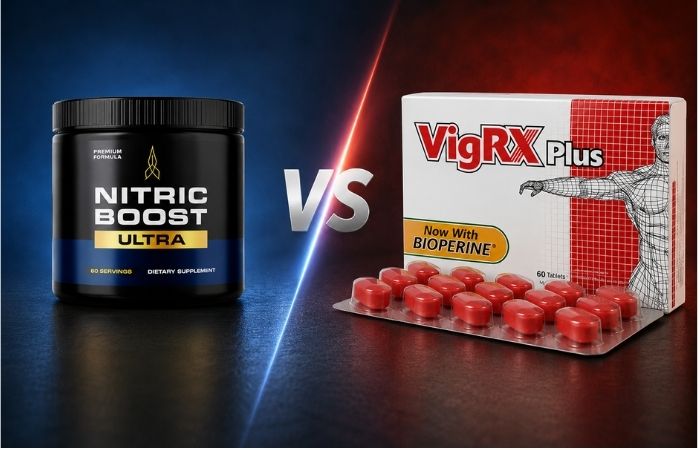
Somewhere between a late-night ad and a bottle promising “instant results,” a lot of men end up buying something that was never tested, never approved, and never safe to take. Counterfeit male enhancement pills are built to look legitimate.
Same style packaging.
Familiar brand names, sometimes just one letter off.
Reviews that read suspiciously well.
The problem is not that buyers are careless.
It is that counterfeiters have gotten good at mimicking the exact signals people are taught to trust.
This guide breaks down how to tell the real thing from a scam, and how to think through the decision so you are not relying on luck.
What Male Enhancement Pills Are Supposed to Do
Legitimate male enhancement products generally fall into two categories.
- Prescription medications, which treat erectile dysfunction through clinically studied active ingredients
- Over-the-counter supplements, which typically claim to support blood flow, libido, or testosterone using herbal or nutrient-based ingredients
Both categories exist for a real purpose.
The issue is that counterfeit and scam products borrow that legitimacy to sell something unregulated, mislabeled, or dangerous.
Who Needs to Be Most Careful When Buying
- Anyone buying from a website they have not used before
- Anyone buying from a marketplace with third-party sellers
- People taking other medications, since hidden ingredients can cause interactions
- People with heart conditions or blood pressure issues, who face the highest risk from undisclosed drug ingredients
- Anyone drawn in by extremely low prices or extremely dramatic promises
The Most Important Buying Criteria
Before looking at a single product, evaluate the source using these criteria.
- Regulatory status: Is this an approved medication, or an unregulated supplement making medical claims?
- Seller legitimacy: Is it sold by a licensed pharmacy, an authorized retailer, or an anonymous third-party seller?
- Ingredient transparency: Does the label list exact amounts, or vague “proprietary blends”?
- Verifiability: Can you confirm the product through the manufacturer’s official site or a pharmacy database?
- Return and complaint history: Does the seller have an actual customer service trail, or just five-star reviews with no detail?
Features and Ingredients That Actually Matter
- Named active ingredients with specific dosages, not just a marketing blend name
- Manufacturer information that is traceable to a real company with a real address
- Lot numbers and expiration dates printed clearly, not smudged or missing
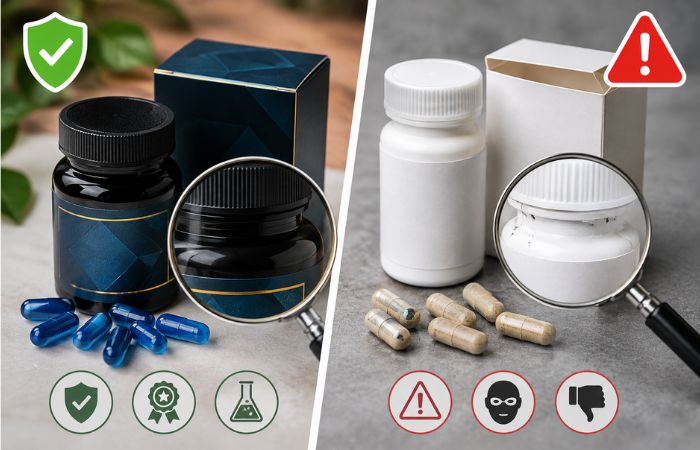
- Consistent packaging that matches official product photos exactly, down to font and color
- Third-party testing or certification, when available, especially for supplements
If a listing cannot answer basic questions about any of these, that is information in itself.
Common Mistakes Buyers Make
- Choosing based on price alone, without checking who is actually selling the product
- Trusting reviews without checking whether they are verified purchases
- Assuming a professional-looking website means a legitimate company
- Buying from search ads without checking the seller’s actual domain
- Ignoring the packaging details because the pills “look the same” as before
Red Flags That Signal a Counterfeit or Scam
- Prices dramatically lower than every other seller of the same product
- No listed manufacturer, or a manufacturer that cannot be found anywhere else online
- Claims of “guaranteed” results, “instant” effects, or comparisons to prescription drugs without evidence
- Packaging with spelling errors, blurry printing, or mismatched fonts
- A seller who only accepts untraceable payment methods
- Reviews that are all posted within a short time window or read like copy-paste templates
- No way to contact the seller beyond a generic email form
- Products shipped from unclear or unlisted locations with no customs documentation
Matching the Product to Different Buyers
If you have a diagnosed condition
Go through a licensed doctor and pharmacy. This is not the category to shop around in. Prescription medication requires medical oversight, and counterfeit versions of these drugs are among the most commonly faked products online.
If you are curious about a supplement
Stick to established brands sold directly by the manufacturer or a major, verifiable retailer.
Treat marketplace listings from unknown third-party sellers with extra scrutiny, even if the brand name looks correct.
If you are price-sensitive
Look for sales from legitimate retailers rather than unusually cheap listings from unfamiliar sellers.
A real discount from a known source is different from a price that is too low to make business sense.
Budget vs Premium: What the Price Actually Tells You
- Budget prescription options: Often available through generic versions at licensed pharmacies, which are legitimate and cost-effective when sourced correctly
- Budget supplements: Higher risk, since low-cost herbal products are the most frequently counterfeited category
- Premium branded products: Generally safer to trust, but only when purchased from the brand itself or an authorized seller, not a discounted third party
- Premium pricing does not guarantee authenticity if the seller itself is not verified
When to Choose Prescription Over Supplement, and Vice Versa
- Choose a prescription route when there is a diagnosed medical cause and you want documented, tested results
- Choose a reputable supplement when you are looking for general wellness support and have realistic expectations about results
- Avoid supplements entirely if you are on blood pressure medication, nitrates, or heart medication, since undisclosed drug ingredients are a known risk in this category
- When in doubt, a conversation with a doctor costs less than a counterfeit product with unknown ingredients
Final Buying Advice
There is no single checklist that guarantees safety, but there is a pattern worth trusting: verified sellers, transparent ingredients, and prices that make sense.
If a product asks you to skip all three in exchange for a bigger promise, that promise is the actual product being sold.
Slow down, check the source, and treat dramatic claims as a reason to look closer, not a reason to buy faster.
FAQ: Counterfeit Male Enhancement Pills
How can I tell if a pharmacy website is legitimate?
Check whether it requires a prescription for prescription medications, has a verifiable physical address, and is listed in a licensed pharmacy database. A site that sells prescription drugs without asking for a prescription is a major warning sign.
Are counterfeit supplements actually dangerous, or just ineffective?
Both. Some counterfeit supplements are simply ineffective, but others have been found to contain undisclosed pharmaceutical ingredients at unregulated doses, which can be genuinely harmful, especially for people with heart conditions.
Is it safe to buy from large marketplaces like Amazon or eBay?
It depends on the seller, not just the platform. Check whether the product is sold and shipped by the platform itself or an authorized brand account, rather than an unfamiliar third-party seller.
Can packaging alone tell me if a product is fake?
It can raise suspicion, but not confirm authenticity on its own. Compare it closely against official product images, and treat any inconsistency as a reason to verify further before use.
What should I do if I think I bought a counterfeit product?
Stop using it, keep the packaging and receipt, and report it to the platform or retailer. If you have already taken it and feel unwell, contact a medical professional.
Sources:
https://www.pennmedicine.org/conditions/male-hypogonadism
https://www.bcm.edu/healthcare/specialties/urology/mens-health/testosterone-replacement-therapy
https://medschool.umich.edu/health-lab-podcast/new-research-gender-affirming-testosterone-and-fertility
https://urology.stanford.edu/patient_care/patient_care.html

Richard Amaro, is a renowned writer, sex therapist, and coach, with years of experience helping individuals and couples enhance their relationships and intimacy. Read more about me…