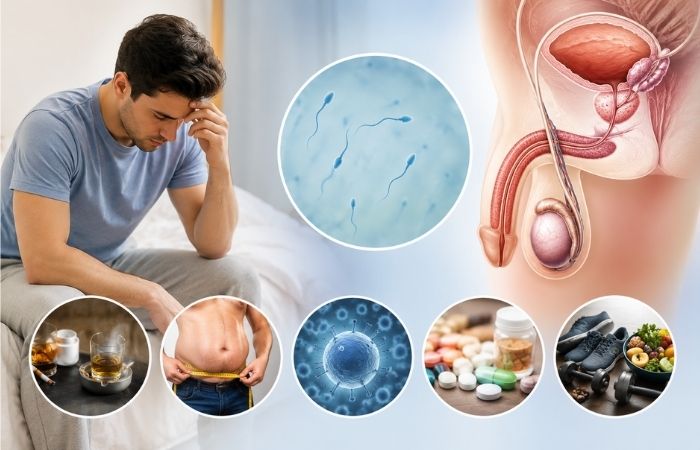
How to Increase Sperm Count Naturally?
Sperm count can often be improved through targeted dietary changes, specific supplementation, and lifestyle adjustments. Most men see measurable improvements in sperm health within three to six months when they combine better nutrition with stress management and regular exercise.
Low sperm count affects fertility, but it also serves as a window into your overall health.
When your body struggles to produce healthy sperm, it often reflects broader issues with nutrient absorption, circulation, and hormonal balance.
The GOOD NEWS is simple.
The same lifestyle changes that improve sperm production also boost energy levels, mental clarity, and cardiovascular health.
You’re not just supporting one aspect of health. You’re building a foundation for total wellness.
Understanding sperm count puts you in control.
Instead of accepting it as fixed, you can take concrete steps to improve it.
In This Article We Cover
- Why sperm count matters and what it really means
- The biological reasons sperm count changes
- How diet directly impacts sperm production
- Key supplements supported by clinical research
- Lifestyle factors that make the biggest difference
- Common myths that mislead men
- What to expect on your improvement timeline
- Practical steps you can start today
What Is Sperm Count and Why Does It Matter?
Understanding the Basics
Sperm count measures how many sperm cells are present in a single milliliter of semen.
A healthy sperm count means 15 million sperm per milliliter or higher, according to current medical standards.
This number matters because fertility depends on quantity and quality working together.
More sperm means more chances for successful conception. But count is only part of the picture.
Why Your Body Produces Sperm
Your testicles manufacture approximately 1,500 sperm cells every second.
This continuous production depends on hormones, nutrients, temperature regulation, and overall health.
When any of these factors falter, sperm count drops.
The encouraging part is that your body keeps making new sperm constantly. Changes you make today can show results within weeks.
Common Causes of Low Sperm Count
Nutritional Deficiencies
Your body cannot manufacture healthy sperm without raw materials. Zinc, selenium, folate, and vitamin C are not optional.
They are essential building blocks.
Modern diets often fall short.
Processed foods provide calories but lack the specific nutrients sperm production demands.
Poor Lifestyle Habits
Heat exposure damages sperm production. Tight clothing, hot baths, and laptop use on the lap all raise testicular temperature.
Smoking and excessive alcohol use directly reduce sperm quality and count.
Stress triggers hormonal imbalances that suppress sperm production.
Chronic stress keeps cortisol elevated, which interferes with testosterone.
Weight and Exercise Patterns
Being overweight correlates with lower sperm count and reduced sperm motility.
Excess body fat produces estrogen, which throws off the testosterone balance your body needs.
Conversely, extreme exercise or overtraining can suppress sperm production.
The goal is balanced, consistent physical activity.
Age and Health Conditions
Sperm count naturally declines slightly with age, but this is usually gradual. Certain health conditions like diabetes, high blood pressure, and thyroid problems can impact sperm production.
The positive finding is that treating underlying conditions and making lifestyle shifts often improves sperm health regardless of age.
Signs That Your Sperm Count May Be Low
Low sperm count itself has no symptoms. You cannot feel it. The only way to know your count is through a semen analysis test ordered by a healthcare provider.
What you might notice instead are related patterns. Difficulty conceiving after a year of trying (or six months if over 35) is the most common indicator that leads men to testing.
Some men experience reduced ejaculate volume, but this alone does not confirm low count. Only testing provides certainty.
How Sperm Production Actually Works
The Production Timeline
Your body takes about 74 days to produce a complete sperm cell from start to finish.
This extended timeline means changes you make today won’t show results for at least two and a half months.
This fact is critical to understand. You cannot expect overnight changes.
Consistent effort over time is the only path to improvement.
The Role of Key Nutrients
Zinc drives sperm cell division and development. Without adequate zinc, your body cannot maintain production rates.
Selenium protects developing sperm from damage. Folate ensures genetic material is correctly formed.
Vitamin C prevents oxidative stress that can damage sperm. Arginine supports blood flow and nitric oxide production in testicular tissue.
These nutrients work together, not in isolation.
Hormonal Balance
Testosterone is the master hormone for sperm production.
Your pituitary gland signals your testicles to make testosterone, which then drives sperm manufacturing.
Anything that disrupts this signaling reduces production.
Weight gain, stress, poor sleep, and nutrient deficiencies all interfere with this delicate hormonal system.
Common Myths About Sperm Count
Myth: Sperm Count Cannot Improve
This is false. Research consistently shows that dietary changes, supplementation, and lifestyle shifts produce measurable improvements in sperm count within three to six months.
Myth: One Supplement Will Fix Everything
No single supplement is a complete solution. Sperm health requires a combination of proper nutrition, supplement support, stress management, and exercise. You need all these elements working together.
Myth: You Need Expensive Treatments
Many effective approaches are accessible and affordable. Dietary improvements, basic supplementation, and free lifestyle changes like exercise and stress reduction often produce better results than expensive procedures.
Myth: Age Makes Improvement Impossible
While sperm count naturally declines with age, men in their 50s and beyond still see meaningful improvements from comprehensive lifestyle changes.
Age slows progress but does not stop it.
What Most Men Currently Do
The Do-Nothing Approach
Many men with low sperm count take no action. They avoid testing or, when diagnosed, assume nothing can be done. This resignation means missing months or years of opportunity for improvement.
The Supplement-Only Approach
Others add supplements but neglect diet and lifestyle. Supplements work best as support for a solid foundation. Without dietary improvements, they deliver limited results.
The Inconsistent Approach
Some men make changes for a few weeks then abandon them when results don’t appear immediately. The 74-day sperm production cycle means patience is essential. Stopping changes too early wastes all prior effort.
Natural Methods to Improve Sperm Count
Dietary Changes for Sperm Health
Increase consumption of zinc-rich foods. Oysters, beef, pumpkin seeds, and chickpeas are excellent sources.
Aim for 11 milligrams of zinc daily for adult men.
Eat selenium-rich foods like Brazil nuts, turkey, and tuna. Just two Brazil nuts daily provides adequate selenium.
Too much selenium becomes harmful, so moderate amounts matter.
Include folate sources like spinach, asparagus, and lentils. Folate supports DNA replication during sperm development.
Deficiency directly correlates with low sperm count.
Add vitamin C through citrus fruits, berries, and bell peppers. Vitamin C reduces oxidative stress that damages developing sperm cells.
Include arginine-rich foods like almonds, peanuts, and chicken. Arginine supports blood flow and nitric oxide production in reproductive tissue.
Practical Dietary Implementation
You do not need to overhaul your entire diet at once.
Start by adding one nutrient-rich food category per week. Add a palm-sized serving of nuts to your daily routine.
Include leafy greens with lunch. Choose fish twice weekly.
These small changes accumulate into significant nutritional improvements without overwhelming you.
Supplement Support
- Quality matters with supplements. Choose brands that test for purity and potency. Look for third-party certifications.
- Zinc supplementation (25-30 mg daily) shows strong research support for improving sperm count when deficiency exists. Get levels tested first to confirm need.
- Selenium supplementation (200 micrograms daily) supports sperm motility and function. Studies show benefits for men with low baseline levels.
- CoQ10 (200-300 mg daily) demonstrates positive effects on sperm count and motility. This antioxidant protects cells from damage during development.
- Folate supplementation (400-800 micrograms daily) improves sperm health, particularly when combined with other nutrients.
- L-arginine (1000-2000 mg daily) may improve blood flow and sperm motility in some men. Results vary by individual.
Lifestyle Changes That Matter Most
- Maintain a healthy weight: Each unit of BMI increase above normal range correlates with lower sperm count. Weight loss of even 10 percent often improves measurements.
- Exercise regularly but moderately: Aim for 150 minutes of moderate exercise weekly. Avoid extreme overtraining, which suppresses hormone production.
- Reduce heat exposure: Choose boxers over briefs. Avoid hot baths and saunas. Keep laptops off your lap. These simple steps lower testicular temperature.
- Manage stress actively: Meditation, yoga, deep breathing, or other stress-reduction practices improve hormonal balance. Even 10 minutes daily shows measurable benefits.
- Sleep adequately: Testosterone production peaks during sleep. Aim for seven to nine hours nightly. Consistent sleep schedule matters more than random long nights.
- Quit smoking: Smoking directly reduces sperm count and motility. Benefits appear within weeks of stopping.
- Limit alcohol: Heavy drinking (more than 2-3 drinks daily) suppresses sperm production. Moderate consumption has minimal impact.
- Avoid illicit drugs: Marijuana, cocaine, and other drugs directly impair sperm production and quality.
What to Expect on Your Timeline
Weeks One to Six
You may notice increased energy and better sleep as stress management and exercise begin working. These early changes build momentum but do not directly affect sperm count yet.
Weeks Seven to Twelve
Dietary improvements start impacting sperm development. You may feel better overall. Sleep quality often improves, mood stabilizes.
Months Three to Six
This is when improvements typically become measurable through testing. A retest at three months often shows progress. Continued effort through month six produces more substantial improvements.
Months Six Onward
Many men see their best results between months six and twelve. Consistency through this period maximizes improvements. Changes become habits rather than temporary efforts.
Key Takeaways
Sperm count can improve significantly through natural methods combining diet, supplementation, and lifestyle change.
The timeline requires patience because sperm production takes 74 days, but measurable improvements typically appear within three to six months.
Nutrition forms the foundation. Without adequate zinc, selenium, folate, and vitamin C, your body lacks raw materials for healthy sperm.
Supplements support but do not replace good nutrition.
Lifestyle factors matter as much as what you consume.
Weight, exercise, stress, sleep, heat exposure, and harmful habits all directly impact sperm production.
Consistency beats perfection
Small, sustainable changes maintained over months produce better results than extreme short-term efforts.
Testing provides clarity. A semen analysis tells you where you stand and allows you to track progress.
Without testing, you cannot measure improvement.
Frequently Asked Questions About
How long does it take to see improvements in sperm count?
Most men see measurable improvements between three and six months. Some notice changes in energy and well-being within weeks, but sperm count specifically requires time because of the 74-day production cycle.
Can supplements alone improve sperm count without diet changes?
Supplements deliver better results when combined with dietary improvements. Diet provides most nutrients your body needs. Supplements fill specific gaps. Relying on supplements alone typically produces limited results.
Does weight loss directly improve sperm count?
Yes. Weight loss improves hormone balance, reduces estrogen production from excess fat tissue, and improves overall circulation. Men who achieve healthy weight ranges typically see sperm count increases.
Can stress really affect sperm production?
Absolutely. Chronic stress elevates cortisol, which interferes with testosterone production and suppresses sperm development. Stress management is not optional for improving sperm health.
Should I get tested before starting improvements?
Yes. A baseline semen analysis tells you your starting point and helps you measure progress. Testing after three to six months of consistent effort shows whether your approach is working.
Can older men improve sperm count?
Yes. While sperm count naturally declines with age, men in their 40s, 50s, and beyond still see meaningful improvements from comprehensive lifestyle and dietary changes.
Is medication necessary for low sperm count?
Not always. Many cases respond well to natural approaches. Only a healthcare provider can determine whether medication is appropriate for your specific situation.
How much zinc should I take daily?
The recommended daily allowance is 11 milligrams for adult men. If supplementing due to deficiency, 25-30 milligrams daily is common. Taking more than 40 milligrams daily long-term can cause problems. Get blood levels tested to determine your specific need.
Does temperature really affect sperm production?
Yes. Sperm production requires temperatures slightly lower than core body temperature. Heat exposure through tight clothing, hot environments, or laptop use reduces production. This is reversible once heat exposure decreases.
What foods should I eat most for sperm health?
Focus on oysters and other shellfish for zinc, Brazil nuts for selenium, leafy greens for folate, citrus and berries for vitamin C, and nuts and seeds for arginine. These core foods cover most nutrients sperm production requires.
Source:
https://stanfordhealthcare.org/medical-conditions/mens-health/low-testosterone.html
https://www.endocrine.org/clinical-practice-guidelines/testosterone-therapy?
https://www.auanet.org/guidelines-and-quality/guidelines/testosterone-deficiency-guideline
https://thischangedmypractice.com/testosterone-testing-male-hypogonadism

Richard Amaro, is a renowned writer, sex therapist, and coach, with years of experience helping individuals and couples enhance their relationships and intimacy. Read more about me…