Does Losing Weight Increase Testosterone?
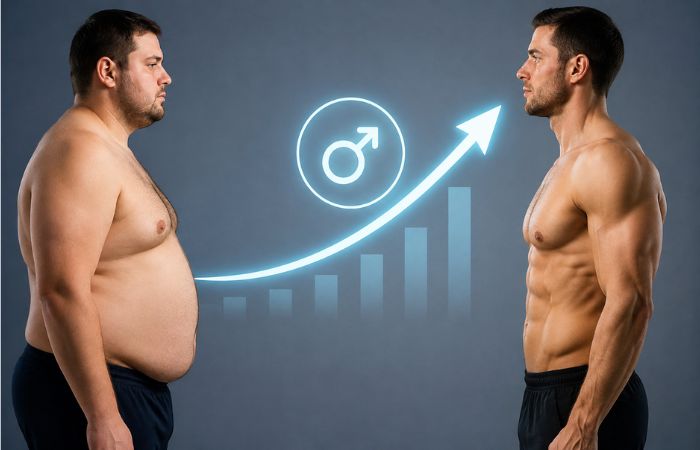
Yes, for men who are overweight or obese, losing weight can meaningfully raise testosterone levels. For men who are already at a healthy weight, the effect is usually small or negligible.
Body weight and testosterone are more connected than most people realize.
Carrying excess fat, especially around the midsection, can quietly lower testosterone over time.
The good news is that this relationship works both ways.
For many men, shedding excess weight can help bring testosterone levels back up.
In this article, you’ll learn:
- Why body fat and testosterone are so closely linked
- Who is most likely to see a testosterone increase from weight loss
- What’s actually happening in the body behind this connection
- Common misconceptions about weight and testosterone
- What realistic results look like, and how long they take
- Practical options for supporting healthy testosterone through weight management
Why the Weight and Testosterone Connection Matters
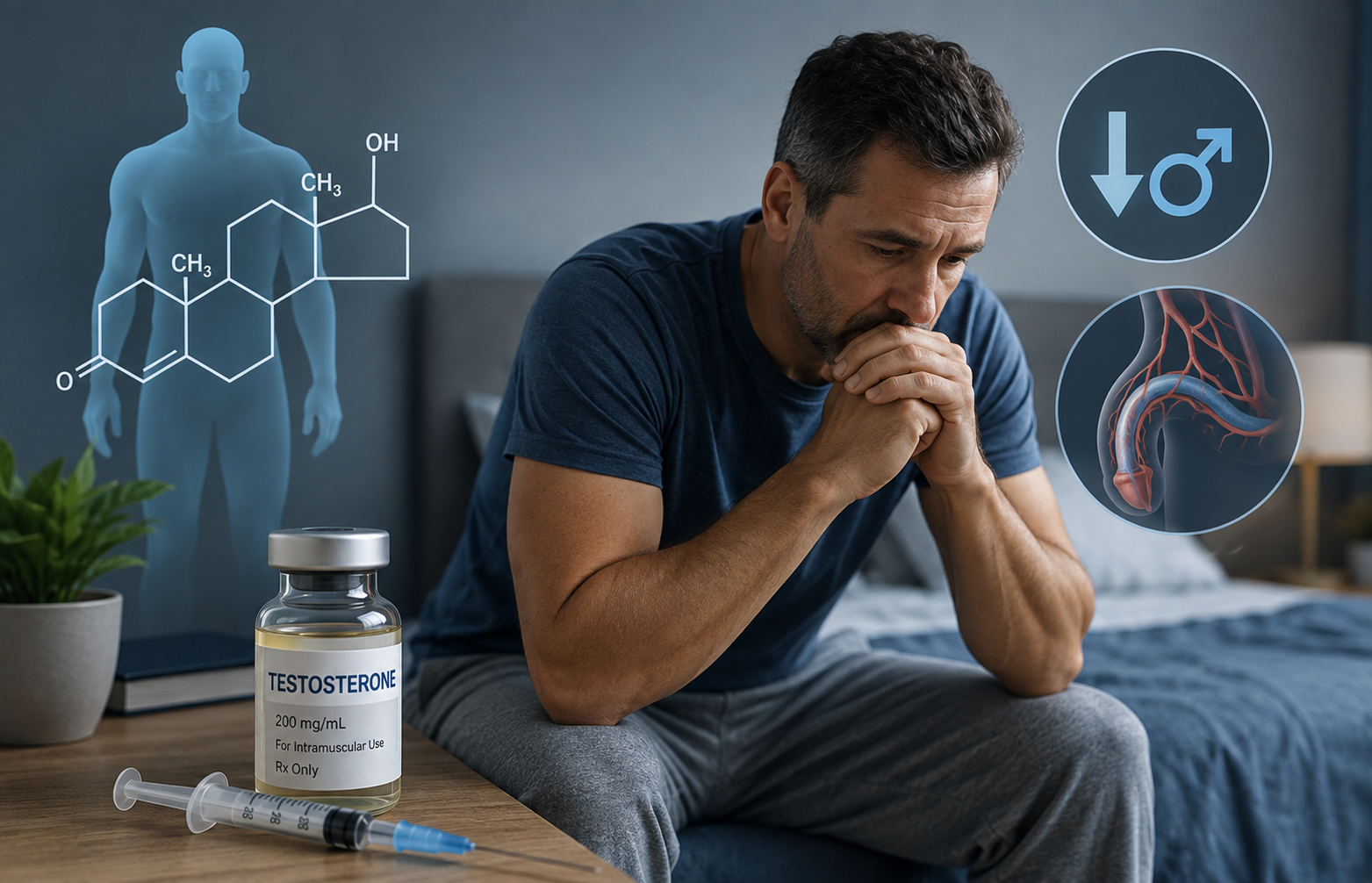
Low testosterone is often treated as a standalone problem that needs medication.
But for many men, excess body fat is a major contributing factor, one that can be addressed without a prescription.
Understanding this connection can mean the difference between chasing symptoms and actually addressing a root cause.
What This Connection Actually Is?
Fat tissue isn’t just storage. It’s biologically active and produces an enzyme called aromatase, which converts testosterone into estrogen.
The more excess fat a man carries, especially visceral fat around the organs, the more this conversion tends to happen, which can lower overall testosterone levels.
Excess weight is also linked to insulin resistance and inflammation, both of which can further interfere with normal testosterone production.
Common Causes Behind Low Testosterone and Weight Gain
- Obesity, particularly higher levels of visceral fat
- Insulin resistance or type 2 diabetes
- Chronic inflammation linked to excess weight
- Poor sleep quality, which often worsens alongside weight gain
- Sedentary lifestyle, which independently affects hormone regulation
Signs That Weight May Be Affecting Testosterone
These signs don’t confirm low testosterone on their own, but they’re common in men whose weight may be playing a role:
- Reduced energy or motivation
- Lower sex drive
- Difficulty building or maintaining muscle despite regular exercise
- Increased body fat, particularly around the abdomen
- Mood changes, including irritability or low mood
How Weight Loss and Testosterone Work Together, Explained Simply
Think of excess fat as a factory that quietly converts testosterone into estrogen.
The bigger the factory, the more conversion happens, and the lower testosterone tends to run.
When someone loses weight, especially fat around the midsection, that factory shrinks.
Less testosterone gets converted, insulin sensitivity often improves, and the body’s hormone signaling tends to normalize.
This is why weight loss can raise testosterone, particularly in men who started at a higher body fat percentage.
Common Misconceptions About Weight Loss and Testosterone
- “Any weight loss will significantly boost testosterone.” The effect is much stronger in men who are overweight or obese. Lean men typically see little to no change.
- “Losing weight fast is better for testosterone.” Extreme calorie restriction can actually lower testosterone temporarily, since the body treats severe deprivation as a stress signal.
- “Muscle loss doesn’t matter as long as the scale goes down.” Losing muscle along with fat can work against testosterone. Preserving muscle through strength training and adequate protein matters.
- “This replaces the need for medical evaluation.” Weight loss can help, but it doesn’t rule out other causes of low testosterone that may still need medical attention.
What People Usually Do About Low Testosterone and Excess Weight
- Start with bloodwork to confirm whether testosterone is actually low
- Begin a gradual, sustainable weight loss plan rather than an extreme diet
- Add strength training to preserve muscle while losing fat
- Address related issues like poor sleep or high stress alongside weight loss
- Follow up with repeat bloodwork after meaningful weight loss to track changes
Options for Managing Testosterone Through Weight Loss
- Gradual calorie deficit. Moderate, sustainable weight loss tends to support hormone balance better than crash dieting.
- Strength training. Preserving muscle mass during weight loss supports healthy testosterone levels.
- Sleep improvement. Poor sleep independently lowers testosterone, so addressing it alongside weight loss matters.
- Medical evaluation. If testosterone remains low after meaningful weight loss, a doctor can check for other underlying causes.
- Patience. Hormonal changes from weight loss typically take months, not weeks, to show up clearly in bloodwork.
Key Takeaways on Losing Weight and Testosterone
- Excess body fat, especially visceral fat, can lower testosterone by converting it into estrogen.
- Weight loss tends to raise testosterone most in men who are overweight or obese, with smaller effects in lean men.
- Extreme, rapid weight loss can backfire and temporarily lower testosterone.
- Preserving muscle through strength training supports better hormonal outcomes during weight loss.
- Bloodwork, not symptoms alone, is the reliable way to track actual testosterone changes.
FAQ: Does Losing Weight Increase Testosterone?
How much weight do I need to lose to see a testosterone increase?
There’s no fixed number, but studies generally show more noticeable increases with significant weight loss, often in the range of 5 to 10 percent of body weight or more, particularly in men who started with obesity.
How long does it take for testosterone to improve after weight loss?
Changes are usually gradual, often becoming measurable after several months of sustained weight loss rather than immediately.
Can losing too much weight lower testosterone instead?
Yes. Very low body fat and extreme calorie restriction can also negatively affect testosterone, so balance matters more than extremes in either direction.
Will testosterone go back to normal automatically after weight loss?
For many men with obesity-related low testosterone, yes, levels often improve. But if levels stay low after meaningful weight loss, it’s worth checking for other underlying causes.
Is exercise or diet more important for raising testosterone?
Both matter. Strength training in particular supports muscle preservation and hormone health, while diet drives the actual weight and fat loss.
Should I get tested before starting a weight loss plan for this reason?
If you suspect low testosterone, baseline bloodwork before starting can help you track real changes and confirm whether it’s worth addressing medically alongside weight loss.
Sources:
https://europepmc.org/article/MED/42415341
https://academic.oup.com/humrep/article-abstract/19/10/2303/589060?redirectedFrom=fulltext
https://academic.oup.com/jsm/article-abstract/10/6/1628/6940119?redirectedFrom=fulltext
https://www.sciencedirect.com/search?qs=testosterone

Richard Amaro, is a renowned writer, sex therapist, and coach, with years of experience helping individuals and couples enhance their relationships and intimacy. Read more about me…