What are the signs of low testosterone in men?
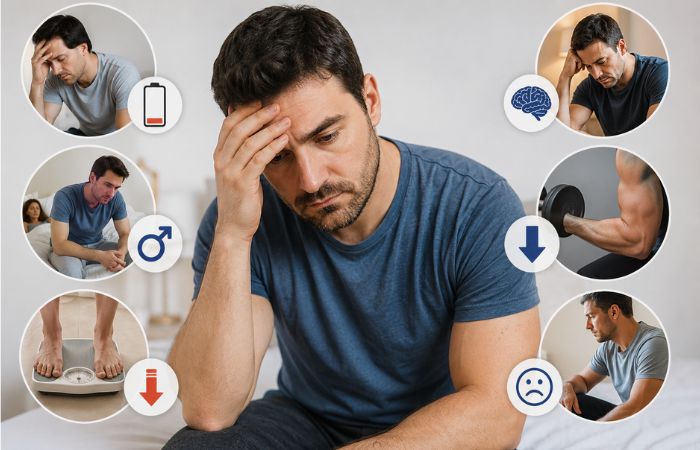
Common signs of low testosterone in men include low sex drive, erectile difficulties, fatigue, reduced muscle mass, and changes in mood. Some men may also experience increased body fat, decreased body hair, difficulty concentrating, or lower motivation.
The most common signs of low testosterone in men include declining sex drive, erectile dysfunction, persistent fatigue, mood changes, difficulty concentrating, loss of muscle mass, weight gain, sleep disturbances, joint pain, and hot flashes.
Testosterone affects far more than most men realize.
When levels drop too low, the symptoms can show up in sexual health, mood, energy, sleep, and even bone strength.
This article walks through the 10 most recognized signs of low testosterone, why they happen, and what they mean.
In This Article You Will Find
- Why low testosterone is more common than most men realize
- The 10 most recognized signs of low testosterone in men
- Common misconceptions that delay diagnosis
- What to do if you recognize these symptoms
- What treatment and management options exist
How Common Is Low Testosterone in Men?
According to the Urology Care Foundation, roughly 4 out of every 10 men over age 45 have low testosterone.
Despite how common it is, the symptoms are often mistaken for normal aging, stress, or unrelated health conditions.
Recognizing the pattern early can lead to a simple blood test and a clear answer, rather than months or years of guessing.
What Is Low Testosterone?
Low testosterone, sometimes called Low T, happens when the body doesn’t produce enough of the hormone responsible for male sexual development, muscle mass, bone density, and mood regulation.
Testosterone naturally declines with age, but when it drops below a certain threshold, it can cause noticeable, disruptive symptoms.
10 Warning Signs of Low Testosterone in Men
1. Declining Sex Drive
A sustained drop in sexual interest is one of the most consistent signs of low testosterone, according to both the Cleveland Clinic and the Endocrine Society.
It’s normal for desire to shift somewhat with age, but a significant, ongoing decline is different from typical variation.
2. Erectile Dysfunction
Testosterone plays a direct role in stimulating the tissue responsible for producing an erection.
When levels drop, some men notice difficulty achieving or maintaining an erection, though this symptom can also stem from unrelated causes like blood pressure or circulation issues.
3. Persistent Fatigue
Feeling tired even after a full night’s sleep is a commonly reported symptom.
This kind of fatigue is often dismissed as normal aging, which is part of why low testosterone frequently goes unrecognized.
4. Mood Changes and Irritability
Some men become noticeably more irritable or emotionally reactive when testosterone drops.
Small inconveniences that wouldn’t normally bother someone can start to feel frustrating or overwhelming.
5. Cognitive Fog and Difficulty Concentrating
Testosterone receptors exist throughout areas of the brain involved in memory and focus.
When levels dip, some men notice trouble concentrating, forgetfulness, or a general sense of mental sluggishness.
6. Loss of Muscle Mass and Strength
Testosterone plays a direct role in building and maintaining muscle.
Low levels are associated with reduced muscle mass, decreased strength, and increased muscular fatigue during normal activity.
7. Weight Gain, Particularly Around the Midsection
Fat cells can convert testosterone into estrogen, which further reduces circulating testosterone levels.
This creates a cycle where weight gain and low testosterone can reinforce each other, though it’s not always clear which comes first in a given case.
8. Sleep Disturbances
Men with lower than normal testosterone often report trouble falling asleep or staying asleep.
Low testosterone has also been associated with sleep apnea, a condition that itself can further disrupt hormone production.
9. Aches, Pains, and Reduced Bone Density
Reduced muscle mass and strength can lead to joint pain and a higher likelihood of injury.
Testosterone also supports bone density, and research has linked low levels to decreased resistance to fractures and increased osteoporosis risk, a condition often assumed to only affect women.
10. Hot Flashes and Cardiovascular Changes
Some men with low testosterone report hot flashes, similar to those associated with hormonal changes in women.
Research has also connected low testosterone to broader cardiovascular factors, including endothelial dysfunction and increased cardiovascular risk markers.
Common Misconceptions About Low Testosterone Symptoms
Misconception: These symptoms always mean low testosterone specifically.
Many of these signs overlap with other conditions, including thyroid issues, depression, and sleep disorders, which is why testing matters more than self-diagnosis.
Misconception: Only sexual symptoms are worth mentioning to a doctor.
Fatigue, mood changes, and cognitive symptoms are just as relevant, even though they’re less commonly associated with testosterone in everyday conversation.
Misconception: Low testosterone only affects older men.
While prevalence increases with age, testosterone can start declining as early as a man’s 30s, often without an obvious cause.
What to Do If You Recognize These Signs of Low Testosterone
Most men notice one or two symptoms first, often fatigue or a change in sex drive, and initially attribute it to stress, aging, or being busy.
It’s typically when multiple symptoms from this list show up together, and persist for months, that men start considering it might be hormonal.
From there, the usual next step is a conversation with a doctor and a simple blood test to check testosterone levels directly.
Treatment Options for Low Testosterone
Low testosterone is manageable, and the right approach depends on what’s driving it.
- A blood test can confirm whether testosterone is actually the underlying issue
- Testosterone replacement therapy is available in several forms for confirmed cases
- Weight loss and exercise have been shown to help some men see a natural boost in testosterone levels
- Addressing sleep issues, including undiagnosed sleep apnea, can support healthier hormone levels
- Other treatable conditions, like thyroid problems, should be ruled out alongside testosterone testing
A healthcare provider is the right person to determine which combination of these fits a specific situation.
Key Takeaways
- Roughly 4 in 10 men over 45 have low testosterone, according to the Urology Care Foundation
- Symptoms span sexual health, mood, cognition, muscle mass, sleep, and bone density
- Many symptoms overlap with other common conditions, which is why testing matters
- Multiple persistent symptoms together are a stronger signal than any single symptom alone
- Effective management options exist once the underlying cause is identified
Frequently Asked Questions About Signs of Low Testosterone
What are the earliest signs of low testosterone in men?
A decline in sex drive and persistent fatigue are among the earliest and most commonly reported signs of low testosterone, often appearing before other symptoms become noticeable.
Can low testosterone cause mood swings and irritability?
Yes. Irritability and increased emotional reactivity are commonly reported symptoms of low testosterone, along with a general sense of low mood in some men.
Does low testosterone cause weight gain in men?
It can contribute to it. Fat tissue converts testosterone into estrogen, which can further lower testosterone levels and create a reinforcing cycle with weight gain.
At what age does testosterone start to decline in men?
Testosterone can begin declining as early as a man’s 30s, though noticeable symptoms often don’t appear until later, and prevalence increases significantly after age 45.
How do I know if I have low testosterone?
A simple blood test ordered by a doctor can measure testosterone levels directly, typically alongside a review of your specific symptoms.
Last Thoughts
Low testosterone rarely announces itself with one obvious symptom.
It tends to show up gradually, across sexual health, energy, mood, and physical strength, which is exactly why so many men miss it or blame it on something else.
If several of these 10 signs sound familiar, especially if they’ve been building for months, a simple blood test can give you a clear answer instead of continued guessing.
Sources:
https://europepmc.org/article/MED/42415341
https://academic.oup.com/humrep/article-abstract/19/10/2303/589060?redirectedFrom=fulltext
https://academic.oup.com/jsm/article-abstract/10/6/1628/6940119?redirectedFrom=fulltext
https://www.sciencedirect.com/search?qs=testosterone

Richard Amaro, is a renowned writer, sex therapist, and coach, with years of experience helping individuals and couples enhance their relationships and intimacy. Read more about me…