What Are The Symptoms Of Low Testosterone In Men?
It’s more common than most men realize.
The American Urological Association defines low testosterone as under 300 nanograms per deciliter of blood, and estimates that about 2 in every 100 men are affected.
Why This Topic Matters
Testosterone affects far more than sex drive.
It plays a role in muscle mass, bone density, mood, energy levels, and sleep quality.
Because the symptoms overlap with so many other conditions, low testosterone often goes unrecognized for years, sometimes mistaken for depression, general aging, or simple fatigue.
In this article, you’ll find:
- What low testosterone is and how common it actually is in men
- The difference between primary and secondary hypogonadism, and what causes each
- Specific symptoms most closely tied to low testosterone, like reduced erections and sex drive
- Non-specific symptoms, like fatigue and low mood, that often get mistaken for other conditions
- How doctors actually diagnose low testosterone through blood testing and symptom evaluation
- Common misconceptions that lead men to dismiss or misunderstand their symptoms
- What treatment and management options are currently available
What Low Testosterone Is?
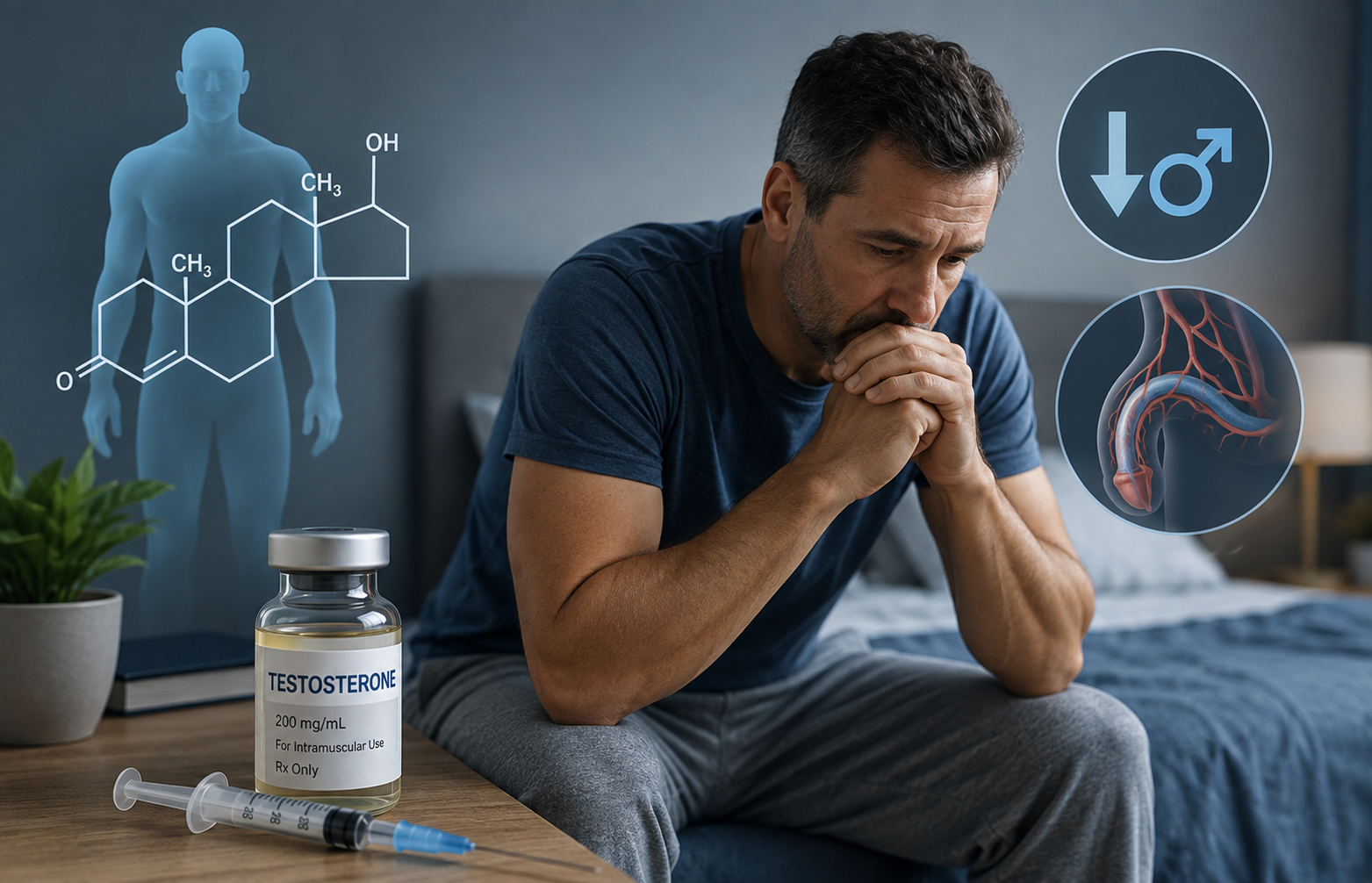
Testosterone is the primary male sex hormone, produced mainly in the testicles.
Low testosterone means the body isn’t producing enough of it to support normal function.
Doctors generally diagnose it through a combination of blood tests and reported symptoms, since testosterone levels alone don’t always tell the full story.
Common Causes and Contributing Factors
Low testosterone falls into two broad categories.
- Primary hypogonadism happens when the testicles themselves aren’t producing enough testosterone. This can result from conditions like Klinefelter syndrome, undescended testicles, mumps orchitis, certain cancer treatments, or normal aging.
- Secondary hypogonadism happens when a problem in the brain’s signaling system, specifically the hypothalamus or pituitary gland, prevents the testicles from receiving the right signals to produce testosterone.
Other contributing factors include:
- Obesity and metabolic conditions
- Chronic opioid use, which research shows can lead to low testosterone in a large share of long-term users
- Certain chronic illnesses
- Natural decline with age
Signs and Symptoms of Low Testosterone in Men
Some symptoms are specific to low testosterone, while others overlap with common, unrelated conditions.
Understanding the difference between the two categories helps explain why this condition is so often missed or misattributed to something else entirely.
Specific Symptoms of Low Testosterone
These symptoms are more closely tied to testosterone specifically, and doctors tend to weigh them more heavily during evaluation.
- Decreased spontaneous erections, meaning fewer erections that happen without direct stimulation
- Reduced nocturnal erections, the natural erections that occur during sleep
- Lower sex drive, often one of the earliest and most noticeable changes
- Reduced testicular size, which can develop gradually over time
- Loss of body hair, particularly in areas that are typically androgen dependent
Decreased spontaneous and nocturnal erections are considered among the most specific indicators of low testosterone, according to clinical research on male hypogonadism.
This is partly why doctors ask about these symptoms directly during an evaluation, even when a patient hasn’t connected them to a hormone issue.
Non-Specific Symptoms That Often Get Overlooked
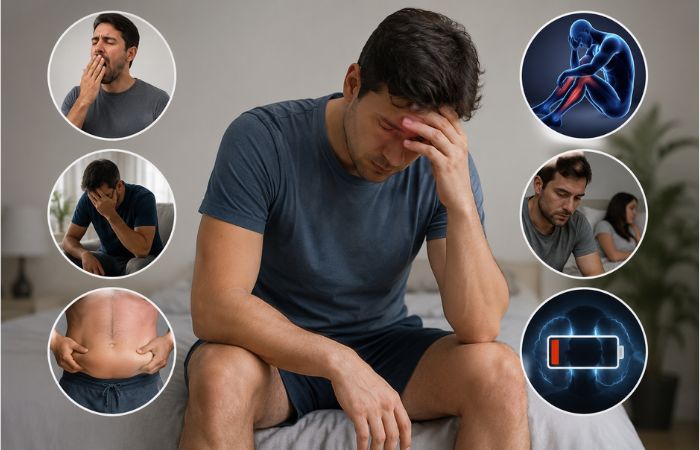
Less specific symptoms, which can resemble other conditions, include:
- Fatigue, often described as persistent tiredness that doesn’t improve with rest
- Low mood or anhedonia, a reduced ability to feel pleasure in things that used to feel enjoyable
- Decreased muscle strength, sometimes noticed as reduced performance during regular exercise
- Difficulty concentrating, occasionally described as mental fog
- Sleep disturbances, including trouble falling asleep or poor sleep quality overall
These symptoms are considered non-specific because they show up in many other common conditions, not just low testosterone.
Fatigue alone can point to dozens of different causes, from thyroid problems to poor sleep habits to depression.
The same is true for low mood and difficulty concentrating, both of which are core symptoms of several mood and anxiety disorders.
This overlap is exactly why low testosterone frequently goes undiagnosed.
A man experiencing fatigue and low mood is far more likely to be evaluated for depression first, since those non-specific symptoms are more commonly recognized and screened for in general checkups.
Why Recognizing Both Symptom Types Matters
Research has specifically noted that the non-specific symptoms of low testosterone are indistinguishable, on their own, from symptoms of mood and anxiety disorders commonly treated in outpatient psychiatric settings.
This means a man with genuinely low testosterone could spend months or years being treated for depression or general fatigue without anyone testing his hormone levels.
Because of this, doctors increasingly recommend looking at the full symptom picture, both specific and non-specific together, rather than relying on any single symptom in isolation.
If you notice a combination of symptoms from both categories, particularly changes in sex drive alongside fatigue or low mood, it’s worth raising testosterone testing specifically with a healthcare provider, rather than assuming it’s just stress or aging.
How the Body Regulates Testosterone Production
Testosterone production starts in the brain, not the testicles.
The hypothalamus sends a signal to the pituitary gland, which then sends its own signal to the testicles telling them to produce testosterone.
If any part of this chain breaks down, whether in the brain’s signaling or in the testicles themselves, testosterone levels can drop.
This is why diagnosis isn’t just about checking a testosterone number. Doctors also look at hormone signals further up the chain to figure out where the disruption is actually happening.
Common Misconceptions
- Misconception: Low testosterone only affects sex drive.
In reality, it can affect mood, energy, muscle mass, bone density, and more. - Misconception: Low testosterone is just a normal part of getting older that doesn’t need attention.
While testosterone does decline naturally with age, persistent symptoms are still worth evaluating rather than dismissing. - Misconception: A single blood test is enough to confirm the diagnosis.
Testosterone levels fluctuate, and there’s no universal agreement across medical societies on the exact cutoff for diagnosis, which is part of why repeat testing and symptom evaluation both matter.
What People Usually Do About It
Most men first notice symptoms like fatigue, low mood, or reduced sex drive, and mention them during a routine checkup or after symptoms persist for weeks or months.
From there, a doctor typically orders blood tests to measure testosterone levels, sometimes along with related hormones, to understand where in the signaling chain the issue is occurring.
Because symptoms overlap with other conditions, doctors often rule out other causes, like thyroid issues or depression, alongside testing for testosterone specifically.
What Options Exist for Managing Low Testosterone?
Low testosterone is treatable, and the right approach depends on the underlying cause.
- Testosterone replacement therapy, available in several forms, is the most direct medical treatment for confirmed cases
- Addressing underlying conditions, like obesity or chronic illness, can improve testosterone levels naturally in some men
- Lifestyle factors, including sleep, exercise, and weight management, play a supporting role
- For secondary hypogonadism, treating the underlying pituitary or hypothalamic issue may be part of the plan
A 2024 international consensus from the Fifth International Consultation on Sexual Medicine outlines current recommendations for diagnosis and treatment, reflecting how much this field has evolved in recent years.
A healthcare provider is the right person to determine which combination of approaches fits a specific case.
Key Takeaways
- Low testosterone affects roughly 2 in 100 men, based on standard diagnostic thresholds
- Symptoms range from specific signs like reduced erections to non-specific ones like fatigue and low mood
- The condition can originate in the testicles themselves or in the brain’s hormone signaling system
- Diagnosis typically requires both blood testing and symptom evaluation, not one or the other alone
- Effective treatment options exist, and the right one depends on the underlying cause
Frequently Asked Questions About low Testosterone Symptoms In Men
What are the most common symptoms of low testosterone in men?
The most specific symptoms include reduced sex drive, fewer spontaneous or nocturnal erections, and reduced testicular size. Less specific symptoms include fatigue, low mood, and reduced muscle strength.
What causes low testosterone in men?
Causes include testicular conditions like Klinefelter syndrome or injury, pituitary or hypothalamic issues, chronic opioid use, obesity, and natural age related decline.
How is low testosterone diagnosed?
Diagnosis typically involves blood testing to measure testosterone levels, combined with an evaluation of symptoms, since levels alone don’t always tell the full picture.
Can low testosterone be mistaken for depression?
Yes. Several non-specific symptoms, including low mood and fatigue, overlap significantly with mood and anxiety disorders, which research shows can lead to missed or delayed diagnosis.
Is low testosterone treatable?
Yes. Treatment options include testosterone replacement therapy, addressing underlying causes, and lifestyle changes, with the right approach depending on what’s driving the low levels in each case.
Sources:
https://mlabs.umich.edu/tests/bioavailable-testosterone-panel
https://stanfordhealthcare.org/medical-conditions/mens-health/low-testosterone.html
https://www.endocrine.org/clinical-practice-guidelines/testosterone-therapy?
https://www.auanet.org/guidelines-and-quality/guidelines/testosterone-deficiency-guideline

Richard Amaro, is a renowned writer, sex therapist, and coach, with years of experience helping individuals and couples enhance their relationships and intimacy. Read more about me…