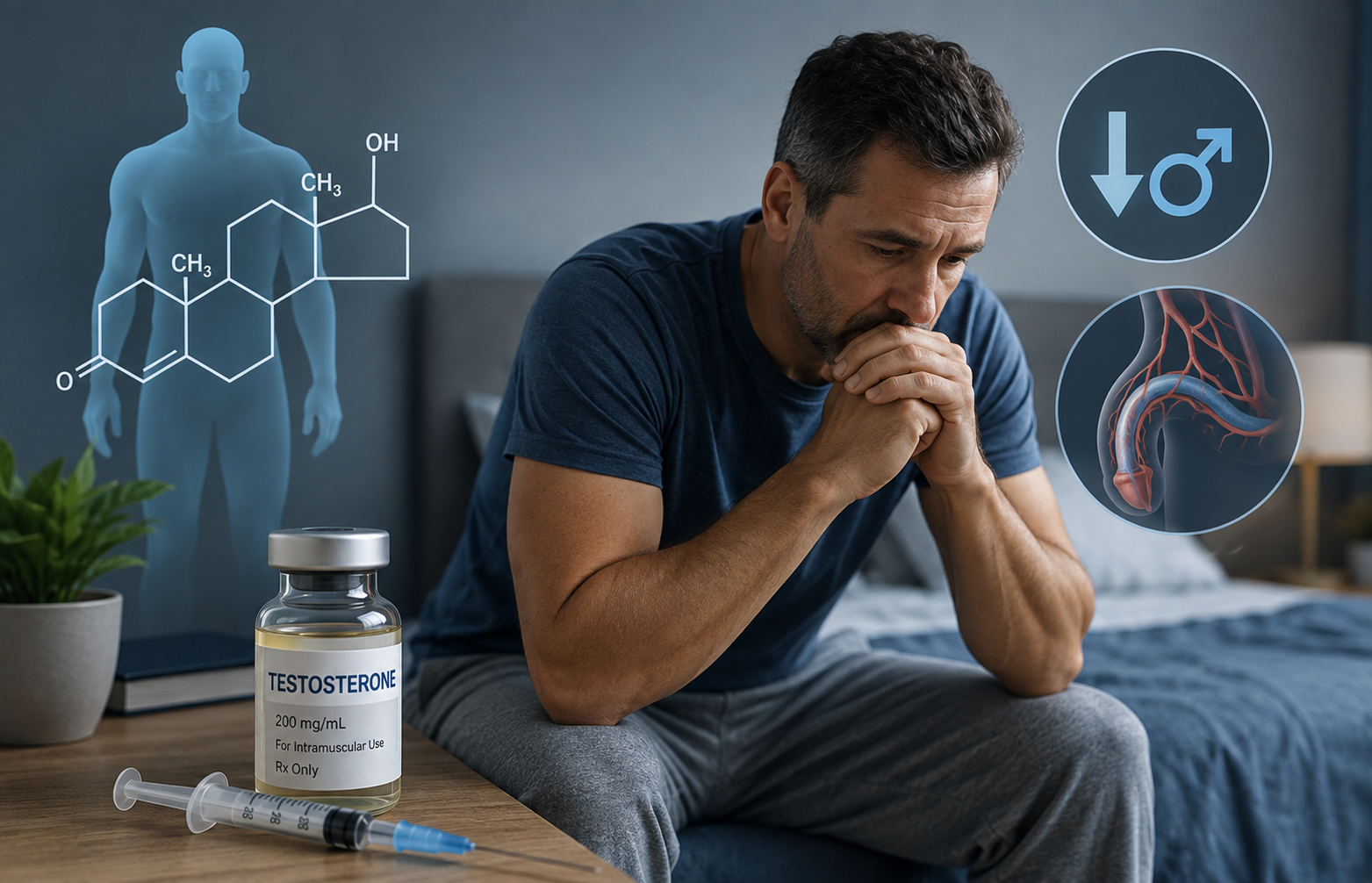
Normal aging causes a slow, mild testosterone decline that rarely disrupts daily life.
Low testosterone (hypogonadism) causes a sharper drop with noticeable symptoms, and it’s confirmed with a blood test, not a feeling.
Low Testosterone or Just Getting Older?
Feeling more tired than you used to, or noticing your motivation isn’t what it was, doesn’t automatically mean something is medically wrong.
It could just be aging. Or it could be low testosterone.
Telling the two apart matters, because one usually needs no treatment, and the other might.
In this article, you’ll learn:
- The difference between normal age-related testosterone decline and clinical low testosterone
- Why this distinction actually matters for your health decisions
- The main causes behind each
- Symptoms that overlap, and symptoms that point more clearly to one or the other
- How doctors actually confirm the difference
- Common misconceptions people have about this topic
- What most people do once they notice symptoms
- The options available for managing either situation
Why Telling Low T From Aging Matters
Confusing normal aging with a medical condition, or the reverse, leads to two common mistakes.
Some men assume every symptom is “just getting older” and never get tested, missing a treatable issue.
Others assume normal aging is a medical problem and pursue treatment they don’t actually need.
Getting this right means fewer unnecessary treatments, and less time spent living with something that’s actually manageable.
What Low Testosterone and Normal Aging Actually Mean
Testosterone naturally declines with age.
Most men see a gradual drop starting around their 30s, often around 1 percent per year.
This is a normal, expected part of aging, not a disease.
Low testosterone, or hypogonadism, is different.
It’s a clinical condition where testosterone drops below a healthy range, confirmed by blood tests, and it’s often accompanied by clear symptoms that go beyond typical aging.
The key difference isn’t just the number.
It’s the pace of the drop, the severity of symptoms, and whether daily life is genuinely affected.
Causes of Low Testosterone vs. Age-Related Decline
Normal aging decline is driven by:
- The natural, gradual slowing of hormone production over time
- No single medical cause, it’s part of the aging process itself
Clinical low testosterone can be driven by:
- Testicular conditions or injury
- Pituitary gland issues, since this gland signals hormone production
- Chronic conditions like obesity, type 2 diabetes, or sleep apnea
- Certain medications, including some opioids and steroids
- Significant, unmanaged chronic stress
Low Testosterone Symptoms vs. Normal Aging Signs
Some symptoms overlap between normal aging and low T, which is exactly why this is confusing.
Others tend to point more clearly in one direction.
Often just aging:
- Slightly less energy than in your 20s
- Gradual, mild changes in muscle tone
- Minor shifts in mood or motivation
More likely low testosterone:
- Significant drop in sex drive, not just a mild dip
- Erectile difficulties that are new and persistent
- Noticeable loss of muscle mass despite normal activity
- Persistent fatigue that doesn’t improve with rest
- Depressed mood or irritability that feels different from your baseline
- Hot flashes or night sweats, in more severe cases
One or two mild symptoms are common with age.
Several moderate to severe symptoms together are more likely to signal a clinical issue worth testing for.
How Testosterone Decline Works, Explained Simply
Think of testosterone like a dimmer switch that slowly turns down over decades.
That’s normal aging, a slow fade most men adjust to without much disruption.
Low testosterone is more like someone reaching over and turning the dial down several notches at once, or holding it at an unusually low setting.
The change is bigger, faster, or more pronounced than the typical aging curve, and the body notices.
Common Misconceptions About Low Testosterone and Aging
- “Low energy always means low T.” Not necessarily. Poor sleep, stress, and other health conditions cause the same symptom.
- “Testosterone levels alone tell the full story.” Symptoms matter just as much as the number. Some men with borderline levels feel fine, others with similar levels feel very affected.
- “This only affects older men.” Clinical low testosterone can occur at younger ages too, often linked to an underlying medical cause rather than age itself.
- “If I feel off, I should just start TRT.” Treatment should follow a confirmed diagnosis, not assumptions based on symptoms alone.
What Men Usually Do About Low T Symptoms
Most men who notice these symptoms:
- Try to explain them away as stress, poor sleep, or normal aging at first
- Eventually mention it to a doctor, often after symptoms persist for months
- Get bloodwork done to check actual testosterone levels
- Review other possible causes, like thyroid issues or sleep apnea, before assuming it’s testosterone
Managing Low Testosterone and Age-Related Decline
For normal age-related decline:
- Regular exercise, particularly strength training
- Consistent sleep
- Balanced diet and healthy weight management
- Stress reduction
For confirmed low testosterone:
- Addressing any underlying cause first, like sleep apnea or medication side effects
- Testosterone replacement therapy (TRT), if clinically appropriate and supervised by a doctor
- Ongoing monitoring through regular bloodwork
- Lifestyle changes alongside medical treatment, not as a replacement for it
Key Takeaways:
- Normal aging causes a slow, mild testosterone decline that usually doesn’t disrupt daily life.
- Clinical low testosterone involves a sharper drop and noticeable symptoms, confirmed through blood tests.
- Overlapping symptoms make self-diagnosis unreliable. Testing is the only way to know for sure.
- Several moderate to severe symptoms together are more concerning than one mild symptom alone.
- Treatment should follow a confirmed diagnosis, not assumptions.
FAQ: Low Testosterone vs. Normal Aging
At what age does testosterone start declining?
Typically starting in the 30s, with a gradual decrease of roughly 1 percent per year for most men.
How do I know if it’s just aging or something more?
The main way is bloodwork combined with a review of your symptoms. Severity and number of symptoms matter more than age alone.
Can lifestyle changes reverse low testosterone?
For mild, age-related decline, lifestyle changes can help. For clinically low levels tied to an underlying cause, lifestyle changes alone usually aren’t enough.
Is testosterone therapy safe for aging-related decline?
TRT is generally intended for confirmed clinical deficiency, not simply for normal aging. A doctor can help determine if it’s appropriate for your specific case.
Should I get tested if my symptoms are mild?
If symptoms are mild and not affecting your daily life, it’s reasonable to monitor them. If they’re persistent or worsening, testing is a reasonable next step.
Can stress and poor sleep mimic low testosterone symptoms?
Yes. Both can cause fatigue, low mood, and reduced libido, which is why ruling out other causes matters before assuming it’s a testosterone issue.
Sources:
https://www.academia.edu/27299058/Impotence_and_its_medical_and_psychosocial_correlates_results_of_the_Massachusetts_male_aging_study
https://pubmed.ncbi.nlm.nih.gov/8254833/
https://www.aru.ac.uk/health-medicine-and-social-care/research/groups/fibrosis
https://www.researchgate.net/publication/374964070_Enhancement_of_Icariin_Aphrodisiac_Effect_by_Solid-SNEDDS_Method_Using_Shark_Liver_Oil_Phase

Richard Amaro, is a renowned writer, sex therapist, and coach, with years of experience helping individuals and couples enhance their relationships and intimacy. Read more about me…