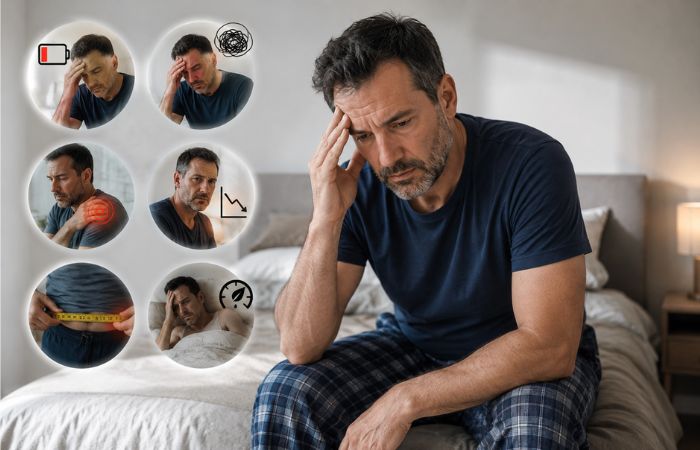
What Are The Andropause Symptoms ?
Andropause involves gradual age-related testosterone decline, causing physical symptoms like persistent fatigue, loss of muscle mass, increased body fat, and decreased bone density. Cognitive and emotional symptoms frequently include mood swings, irritability, low motivation, mild depression, and brain fog or trouble concentrating.
Unlike female menopause, it develops slowly over years and doesn’t affect all men equally, but when it does occur, symptoms can significantly impact quality of life and overall wellbeing.
Understanding what’s happening in your body helps you recognize whether andropause might be affecting you.
This guide explains the science, the signs, and what you can actually do about it.
What You’ll Learn: Andropause Symptoms and Solutions
- What andropause is and why it happens differently than female menopause
- The full range of symptoms men experience during andropause
- How testosterone decline affects your body, mood, and energy
- When andropause typically starts and what’s normal
- Proven strategies to manage symptoms and improve quality of life
Why Andropause Matters: Age-Related Testosterone Decline Explained
Many men don’t realize their symptoms have a biological cause. They chalk up fatigue, weight gain, or mood changes to getting older or stress.
Knowing about andropause helps you understand what’s actually happening. It also helps you take action instead of simply accepting declining health and energy.
Andropause is common and manageable. Recognizing it early gives you more options to feel like yourself again.
What Is Andropause: Definition of Male Menopause and Testosterone Decline
Andropause is the gradual decline of testosterone levels in men as they age.
It’s sometimes called “male menopause,” though this isn’t technically accurate because it’s not a sudden transition like female menopause.
Testosterone naturally drops about 1% per year after age 30. For some men, this decline becomes noticeable and causes symptoms.
For others, it has little effect.
Andropause isn’t a disease or condition you catch. It’s a natural aging process that happens to varying degrees in different men.
Why Andropause Happens: Common Causes and Contributing Factors
Natural Aging and Testosterone Decline
The primary cause is age. Your body simply produces less testosterone over time. This is normal biology, not a failure of your body.
However, not all testosterone decline is equal. Some men maintain higher levels into old age, while others experience steeper drops.
Other Contributing Factors
- Obesity: Fat tissue breaks down testosterone and produces estrogen
- Poor sleep: Sleep is essential for testosterone production
- Chronic stress: High cortisol levels suppress testosterone
- Lack of exercise: Physical activity maintains hormone levels
- Poor diet: Nutrition directly affects hormone balance
- Medications: Some drugs lower testosterone
- Alcohol consumption: Regular heavy drinking reduces testosterone
- Smoking: Damages the cells that produce testosterone
- Underlying health conditions: Diabetes, heart disease, or thyroid problems can worsen hormone decline
- Genetic factors: Some men are genetically predisposed to faster decline
Andropause Symptoms: Physical and Mental Signs to Watch For
Low Energy and Fatigue
Persistent tiredness despite adequate sleep is one of the most common complaints.
You might feel exhausted all day or struggle to find motivation for activities you once enjoyed.
This fatigue often doesn’t improve with rest alone.
It’s tied directly to lower hormone levels affecting your mitochondria and energy production.
Mood Changes and Mental Health Symptoms
Many men experience irritability, mood swings, or feelings of sadness or emptiness.
Some report feeling anxious or depressed without obvious reason.
These changes can affect relationships and work performance. They’re real symptoms, not character flaws or weakness.
Reduced Sexual Function
Decreased sexual desire is extremely common. Men might notice reduced frequency of erections or need more stimulation than before.
This can cause embarrassment and strain relationships. It’s important to know this symptom responds well to treatment.
Body Composition Changes
Many men notice weight gain, especially around the abdomen, despite eating normally. Muscle tone decreases and muscles feel weaker.
This happens because testosterone supports muscle maintenance and healthy metabolism. Lower levels make it harder to maintain the body you had.
Sleep Problems
Insomnia or poor sleep quality is common. Some men wake frequently at night or have trouble falling asleep in the first place.
Ironically, poor sleep worsens testosterone production, creating a cycle that feeds on itself.
Hot Flashes and Night Sweats
Some men experience sudden heat sensations, flushing, and night sweats similar to what women experience during menopause. These can disrupt sleep and daily activities.
Cognitive Changes
Difficulty concentrating, slower thinking, or feeling mentally foggy are reported by some men. Memory issues can develop.
These changes are usually mild compared to other symptoms but can be frustrating when they happen.
Other Physical Symptoms
- Joint or muscle pain
- Headaches
- Reduced bone density
- Height loss
- Urinary symptoms
How Andropause Works: The Biology Behind Testosterone Decline
The Testosterone Production System
Your brain’s pituitary gland sends signals to your testicles telling them to produce testosterone. As you age, your testicles become less responsive to these signals.
Additionally, your brain produces fewer signaling chemicals. The result is lower overall testosterone production.
How Testosterone Affects Your Body
Testosterone isn’t just about sexual function. It affects almost every system in your body.
It maintains muscle mass and strength. It regulates mood and energy levels. It supports bone density, heart health, and metabolic function. Lower levels affect all of these systems simultaneously.
The Cascade Effect
When testosterone drops, the effects cascade through your body.
Low energy makes you exercise less, which worsens weight gain, which further lowers testosterone.
Poor sleep reduces production, which causes fatigue, which worsens sleep.
Understanding these connections helps explain why several symptoms often appear together.
Common Misconceptions About Andropause: Myths vs Facts
Myth: Andropause Only Affects a Small Number of Men
False. Studies suggest 20-50% of men over 50 experience andropause symptoms. It’s far more common than most men realize.
Myth: Andropause Is Exactly Like Female Menopause
Not really. Female menopause happens over 1-2 years with a clear endpoint. Andropause develops gradually over decades without a clear end point. The experience is different.
Myth: Declining Testosterone Is Just Normal Aging You Have to Accept
While it’s natural, it doesn’t mean you have to suffer through low energy, depression, and weight gain. Many treatment options exist that help significantly.
Myth: Testosterone Therapy Is Dangerous for All Men
Hormone therapy has risks and benefits that need to be discussed with a doctor. It’s not universally dangerous, but it also isn’t right for everyone. Proper medical supervision and testing matter.
Myth: If You Don’t Feel Bad, You Don’t Have Andropause
Many men have moderately low testosterone that hasn’t yet caused noticeable symptoms. Some men adapt to gradual changes without recognizing them as problems until they get medical testing.
Myth: There’s Nothing You Can Do About Testosterone Decline
Absolutely not true. Lifestyle changes often improve symptoms significantly. Medical options exist when lifestyle changes alone aren’t enough.
What People Do About Andropause: Common Treatment Approaches
Lifestyle Modifications: First Line of Action
Most men start by making changes that naturally support testosterone production and reduce symptoms.
- Regular exercise, especially strength training and aerobic activity
- Weight loss if overweight, which can significantly raise testosterone
- Improved sleep quality and consistent sleep schedule
- Stress reduction through relaxation, meditation, or counseling
- Reduced alcohol consumption
- Quitting smoking if applicable
- Better nutrition with adequate protein and healthy fats
- Limiting sugar and processed foods
These changes improve symptoms for many men without any medical intervention. Even if medication becomes necessary, these changes amplify its effects.
Medical Consultation and Testing
If lifestyle changes don’t provide relief, or if symptoms are severe, seeing a doctor is important. They can order blood tests to measure actual testosterone levels.
Not all men with low testosterone need treatment. Doctors consider symptoms, test results, and individual circumstances before recommending intervention.
Managing and Improving Andropause: Effective Treatment Solutions
Hormone Replacement Therapy Options
Testosterone replacement therapy (TRT) exists in several forms.
These include injections, gels, patches, and pellets implanted under the skin.
Hormone therapy can effectively raise testosterone levels and improve symptoms.
However, it requires ongoing monitoring and isn’t appropriate for all men.
Some men have contraindications that make therapy risky.
A doctor needs to evaluate your specific situation before prescribing TRT.
Supporting Testosterone Naturally
Several approaches support testosterone without prescription hormones.
- Strength training: Builds muscle, which improves testosterone levels
- Weight management: Reduces fat tissue that breaks down testosterone
- Improved sleep: Essential for hormone production
- Stress reduction: Lowers cortisol, which supports testosterone
- Limiting alcohol: Preserves the testicles’ ability to produce hormones
- Certain supplements: Talk with a doctor about zinc, vitamin D, or herbal options
- Regular sexual activity: Can support healthy hormone levels
Treating Specific Symptoms
Some symptoms can be addressed separately. Depression might improve with counseling or antidepressants.
Sleep problems might benefit from better sleep hygiene or sleep aids.
Addressing mood and sleep separately while also supporting testosterone levels often provides the best results.
Mental and Relationship Support
Andropause can affect self-image and relationships. Talking with a therapist or counselor helps. So does honest communication with your partner about what you’re experiencing.
Many men find that support improves their mood as much as hormone changes do.
Key Takeaways: What You Need to Know About Andropause
- Andropause is a natural decline in testosterone that affects many men starting in their 40s or 50s
- Symptoms range from low energy and mood changes to reduced sexual function and body composition changes
- The decline is gradual and normal, but doesn’t mean you have to accept poor quality of life
- Lifestyle changes often improve symptoms significantly without medication
- Medical options exist when lifestyle changes alone aren’t sufficient
- Proper testing and doctor evaluation are essential before starting any treatment
- Andropause symptoms are treatable, and most men can feel significantly better
Frequently Asked Questions About Andropause and Male Menopause
At What Age Does Andropause Typically Begin
Andropause most commonly begins between ages 40 and 55, though it can start earlier or later. Some men notice symptoms in their 30s, while others don’t experience problems until their 60s or 70s.
The wide variation is normal. Genetics, lifestyle, and overall health all play roles in when and how severely andropause affects you.
Is Andropause Different From Hypogonadism
Hypogonadism is a medical condition where the testicles don’t produce adequate testosterone. Andropause is age-related testosterone decline.
They’re related but distinct. Hypogonadism can happen at any age and has specific medical causes. Andropause is part of normal aging.
Do All Men Experience Andropause Symptoms
No. Many men have declining testosterone without noticeable symptoms. Others experience significant effects from the same level of decline.
Your genetics, overall health, lifestyle, and baseline testosterone levels all influence whether you’ll experience symptoms.
Can Testosterone Levels Be Too High From Treatment
Yes. This is why medical supervision and regular testing matter. Excessive testosterone can cause side effects like aggression, sleep apnea, or increased prostate risk.
Proper dosing aims to restore levels to normal, not exceed them.
Does Testosterone Therapy Increase the Risk of Prostate Cancer
This is debated in medical literature. Some studies show no increased risk when therapy is properly monitored. Others suggest potential concerns. Men with a personal or family history of prostate cancer need careful evaluation before starting therapy.
This is one reason medical supervision and regular prostate screening matter.
How Long Does It Take to Feel Better From Andropause Treatment
Most men notice some improvement within 2-4 weeks if testosterone replacement is started. Energy and mood typically improve first.
Larger changes, like increased muscle or reduced body fat, take 2-3 months or longer to develop.
Can Women Take Testosterone
Some women have low testosterone and might benefit from small doses. However, testosterone therapy in women carries different considerations and risks than in men.
Women experiencing symptoms should discuss hormone therapy with a doctor who specializes in women’s health.
Does Andropause Affect Relationships
Yes. Reduced sexual desire, mood changes, and low energy can all strain relationships. Partners might misunderstand these changes as rejection or loss of interest.
Open communication about what’s happening helps. So does getting treatment, which often restores sexual function and mood.
Is There a Simple Blood Test to Diagnose Andropause
Blood tests can measure testosterone levels. However, andropause isn’t simply diagnosed by one low test. Doctors look at symptoms, multiple test results, and overall health.
One low reading doesn’t automatically mean treatment is needed. Context matters.
Can Andropause Symptoms Resolve Without Treatment
Some men see symptoms stabilize or slightly improve on their own as they adapt to lower testosterone. However, complete resolution without intervention is less common.
Most men who experience bothersome symptoms benefit from some form of treatment or intervention.
Should Young Men Worry About Andropause
Andropause isn’t something to worry about in your 20s or early 30s. Focus on healthy habits that support long-term testosterone: exercise, good sleep, stress management, and avoiding smoking and excessive alcohol.
These habits protect your future health and help your body maintain testosterone better as you age.
Sources:
https://dph.illinois.gov/topics-services/life-stages-populations/mens-health/health-screening-guide.html
https://www.jomh.org/
https://health.ucdavis.edu/conditions/mens-health/aging-mens-health
https://www.prevention.va.gov/Healthy_Living/Get_Recommended_Screening_Tests_and_Immunizations_for_Men.asp

Richard Amaro, is a renowned writer, sex therapist, and coach, with years of experience helping individuals and couples enhance their relationships and intimacy. Read more about me…