Does Poor Sleep Affect Testosterone and Libido?
Yes, poor sleep can affect testosterone levels, sexual desire, and overall sexual health. Consistently getting too little sleep or having disrupted sleep may interfere with the body’s normal hormone regulation, energy levels, mood, and sexual interest.
However, low libido is not always caused by poor sleep. Stress, medications, health conditions, relationship factors, and naturally changing hormone levels can also play a role.
Sleep is often treated as something that can be sacrificed when life gets busy.
Work, family responsibilities, stress, late-night screen use, and irregular schedules can all reduce the amount or quality of sleep a person gets.
Over time, poor sleep can affect much more than daytime energy.
Sleep is involved in many processes throughout the body, including hormone regulation, metabolism, immune function, mood, and brain health.
For men, this raises an important question: can poor sleep affect testosterone and libido?
The answer is yes, particularly when sleep problems are persistent.
Research has found connections between sleep duration, sleep quality, testosterone levels, and sexual function.
The relationship is complex, however, and one bad night of sleep does not necessarily cause a meaningful hormone change or loss of sexual desire.
In This Article
- How sleep and testosterone are connected
- Why testosterone matters for libido
- How poor sleep may affect sexual desire
- The role of sleep quality and sleep duration
- Common causes of poor sleep
- Signs that sleep may be affecting sexual health
- Common misconceptions about testosterone and sleep
- Ways to improve sleep naturally
- When to speak with a healthcare professional
- Frequently asked questions
Why Does Sleep Matter for Testosterone and Libido?
Sleep is an active biological process, not simply a period when the body shuts down.
During sleep, the body regulates hormones, repairs tissues, processes information, and supports normal brain and metabolic function.
Testosterone production is also connected with sleep.
Testosterone levels normally follow a daily rhythm and tend to be higher in the morning after adequate sleep.
When sleep is repeatedly shortened or disrupted, this normal pattern may be affected.
Sleep also influences libido in ways that are not directly related to testosterone.
Feeling exhausted, stressed, anxious, or emotionally drained can naturally reduce interest in sex.
For this reason, improving sleep may benefit sexual health even when low testosterone is not the primary problem.
What Is Testosterone?
Testosterone is a hormone that plays an important role in male sexual development and health.
It contributes to several functions, including:
- Sexual desire
- Sperm production
- Muscle development
- Bone health
- Red blood cell production
- Energy and general well-being
Testosterone levels naturally vary between individuals and change throughout the day.
They also tend to decline gradually with age.
A lower testosterone measurement does not automatically mean that a person has a medical hormone disorder.
Symptoms, repeated hormone measurements, medical history, and other factors are considered when evaluating possible testosterone deficiency.
What Is Libido?
Libido is another word for sexual desire or interest in sexual activity.
Unlike testosterone, libido is not controlled by one biological factor.
Sexual desire can be influenced by:
- Hormones
- Sleep
- Stress
- Mood
- Medications
- Physical health
- Relationship satisfaction
- Sexual experiences
- Energy levels
This means someone can have normal testosterone levels and still experience low libido.
Likewise, a person with lower testosterone may not necessarily experience a dramatic change in sexual desire.
How Poor Sleep May Affect Testosterone
Testosterone production is closely connected with sleep.
Some testosterone production occurs during sleep, particularly during certain stages of the normal sleep cycle.
When sleep is consistently restricted, the body may not have the same opportunity to maintain its normal hormone patterns.
Studies have found that significant sleep restriction can be associated with lower testosterone levels in some men.
However, individual responses vary, and sleep is only one factor affecting testosterone.
Other factors such as age, body weight, physical activity, alcohol use, medications, illness, and overall health can also influence testosterone.
Can One Bad Night Lower Testosterone?
A single poor night’s sleep can leave you tired, irritable, and less interested in sex, but it does not necessarily mean that your testosterone has become abnormally low.
The bigger concern is chronic sleep disruption.
Repeatedly sleeping too little may have a greater effect on hormone regulation than an occasional late night.
For this reason, it is more useful to look at sleep patterns over weeks and months rather than focusing on one night.
How Poor Sleep Can Affect Libido
Sleep can influence libido through several different pathways.
Low Energy
When you are exhausted, sexual activity may simply become less of a priority.
The brain naturally focuses on recovering energy and managing daily demands.
Stress
Poor sleep can make it harder to cope with stress. Chronic stress may reduce sexual interest and make it more difficult to relax during intimate situations.
Mood Changes
Sleep problems are associated with changes in mood, including irritability and low mood.
Depression and anxiety can also reduce libido, and sleep problems can occur alongside both conditions.
Hormonal Changes
Chronic sleep disruption may affect hormones involved in sexual function, including testosterone.
Relationship Effects
Constant tiredness can reduce time, energy, and emotional availability for a partner. Over time, this may affect intimacy and sexual interest.
What Counts as Poor Sleep?
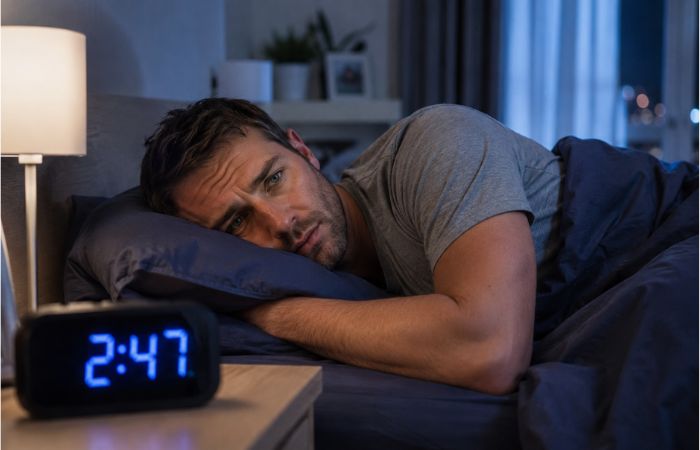
Poor sleep does not only mean sleeping for a short number of hours.
Sleep quality matters as well.
Examples of poor sleep include:
- Frequently sleeping too few hours
- Waking repeatedly during the night
- Difficulty falling asleep
- Waking too early
- Feeling unrefreshed after sleeping
- Having an inconsistent sleep schedule
- Experiencing excessive daytime sleepiness
Most adults need around seven or more hours of sleep per night, although individual needs can vary.
Sleep Apnea and Testosterone
Sleep apnea deserves special attention because it can repeatedly interrupt normal sleep.
Obstructive sleep apnea occurs when the upper airway repeatedly becomes blocked or narrowed during sleep.
This can cause breathing interruptions, brief awakenings, and reduced sleep quality.
Common signs can include loud snoring, gasping during sleep, morning headaches, excessive daytime sleepiness, and waking with a dry mouth.
Sleep apnea is associated with several health problems and may also be associated with sexual dysfunction and hormonal changes.
If you regularly snore loudly, stop breathing during sleep according to a partner, or feel extremely tired during the day despite spending enough time in bed, discussing these symptoms with a healthcare professional may be worthwhile.
Common Causes of Poor Sleep
Sleep problems can have many causes.
- Stress and anxiety
- Irregular work schedules
- Excessive caffeine
- Alcohol consumption
- Late-night screen use
- Uncomfortable sleeping environments
- Chronic pain
- Medical conditions
- Sleep apnea
- Insomnia
Identifying the underlying reason for poor sleep is often more useful than simply trying to sleep longer.
Signs That Poor Sleep May Be Affecting Sexual Health
There is no single symptom that proves poor sleep is causing low libido.
However, you may notice several changes occurring together.
- Lower interest in sex
- Less energy throughout the day
- Difficulty concentrating
- Increased irritability
- Reduced motivation
- Changes in sexual performance
- Feeling tired even after spending enough time in bed
- More frequent difficulty becoming sexually aroused
If these problems persist, it is worth considering sleep quality as one possible factor while also looking at other causes.
Common Misconceptions About Sleep and Testosterone
More Sleep Always Means More Testosterone
Not necessarily. Adequate sleep is important, but testosterone is influenced by many factors. Simply spending extra time in bed does not guarantee higher testosterone.
Low Libido Always Means Low Testosterone
This is one of the most common misconceptions.
Low sexual desire can result from stress, anxiety, depression, relationship problems, medications, fatigue, poor sleep, and many other factors.
One Bad Night Causes Low Testosterone
An occasional poor night of sleep is unlikely to explain persistent symptoms. Long-term patterns are generally more relevant.
Everyone Needs Exactly Eight Hours
Sleep needs vary. Many adults need at least seven hours, but individual requirements differ.
Sleep Supplements Are the Solution
Supplements are not automatically safe or effective for sleep or testosterone. Some products marketed as testosterone boosters have limited evidence and may contain ingredients that are not appropriate for everyone.
How to Improve Sleep and Support Hormonal Health
Keep a Consistent Sleep Schedule
Try to go to bed and wake up at roughly the same times each day, including weekends.
A consistent schedule helps reinforce the body’s natural sleep-wake rhythm.
Create a Dark, Quiet Bedroom
A comfortable sleep environment can make it easier to stay asleep.
Keep the bedroom cool, dark, and quiet when possible.
Reduce Caffeine Later in the Day
Caffeine can remain in the body for several hours. If caffeine interferes with your sleep, consider limiting it later in the day.
Limit Alcohol Before Bed
Alcohol may make some people feel sleepy initially, but it can disrupt sleep later in the night.
Exercise Regularly
Regular physical activity can support sleep quality and overall health.
Walking, strength training, cycling, swimming, and other activities can be useful choices.
Manage Stress
Relaxation techniques, breathing exercises, meditation, journaling, and regular physical activity may help manage everyday stress.
Reduce Late-Night Screen Exposure
Bright screens and stimulating content can make it harder for some people to wind down.
Creating a relaxing routine before bed may help signal that it is time to sleep.
What People Usually Do About Low Libido
The first step is understanding whether the change is temporary or persistent.
If low libido appears during a period of stress, illness, sleep deprivation, or major lifestyle changes, addressing those factors may help.
When low sexual desire continues, a healthcare professional can evaluate possible causes.
This may include reviewing medications, health conditions, sleep habits, mood, hormone levels, and other aspects of sexual health.
When Should You Talk to a Healthcare Professional?
Consider speaking with a healthcare professional if low libido persists, is worsening, or is affecting your quality of life or relationship.
It is especially important to seek evaluation if low sexual desire occurs alongside erectile difficulties, significant fatigue, changes in body composition, mood changes, or other unexplained symptoms.
If low testosterone is suspected, diagnosis generally requires symptoms combined with appropriately timed blood tests rather than relying on symptoms alone.
Key Takeaways
- Poor sleep can affect testosterone and sexual desire, especially when sleep problems are persistent.
- Sleep supports normal hormone regulation and overall physical and mental health.
- Low libido does not automatically mean low testosterone.
- Stress, fatigue, depression, medications, health conditions, and relationship factors can also affect sexual desire.
- Sleep apnea can significantly disrupt sleep and deserves medical attention when symptoms are present.
- Consistent sleep habits, regular exercise, stress management, and a healthy lifestyle can support better sleep.
- Persistent changes in libido should be discussed with a healthcare professional.
FAQ About How Poor Sleep Affect Testosterone and Libido
Can poor sleep lower testosterone?
Chronic sleep restriction or disrupted sleep may reduce testosterone levels in some men. However, testosterone is influenced by many factors, so poor sleep is not always the primary cause of low testosterone.
Can sleeping more increase testosterone?
Getting enough high-quality sleep supports normal hormone regulation. If someone is regularly sleep deprived, improving sleep may help restore healthier hormone patterns, but it does not guarantee a specific increase in testosterone.
How many hours of sleep do men need for healthy testosterone?
Most adults need around seven or more hours of sleep per night, although individual needs vary. Consistency and sleep quality are also important.
Can lack of sleep reduce sex drive?
Yes. Sleep deprivation can increase fatigue and stress and may affect hormone regulation. These changes can reduce sexual interest in some people.
Does sleep apnea affect testosterone?
Sleep apnea can severely disrupt sleep and is associated with sexual and metabolic health problems. If sleep apnea is suspected, medical evaluation is appropriate.
Can poor sleep cause erectile dysfunction?
Poor sleep may contribute to erectile difficulties indirectly through fatigue, stress, cardiovascular health, and hormonal changes. However, ED has many possible causes.
Will fixing my sleep problems restore my libido?
It may help if inadequate or disrupted sleep is an important contributor. However, libido can be affected by many factors, so improving sleep may not resolve the problem completely.
Should I take testosterone if I have low libido?
Not without medical evaluation. Testosterone treatment is appropriate only for certain men with confirmed low testosterone and relevant symptoms. Taking testosterone without proper evaluation can carry risks.
Can exercise improve sleep and testosterone?
Regular exercise can support better sleep and overall health. It may also support healthy hormone function, particularly when combined with adequate nutrition and recovery.
Last Considerations
Sleep plays an important role in overall health, and consistently poor sleep can affect testosterone, energy, mood, and sexual desire.
For some men, improving sleep may be an important step toward improving libido and overall sexual well-being.
However, low libido should not automatically be blamed on testosterone or sleep.
Sexual desire is influenced by a combination of biological, psychological, lifestyle, and relationship factors.
If you regularly feel tired, sleep poorly, or notice a persistent decline in sexual desire, improving sleep is a sensible place to start.
At the same time, persistent symptoms deserve a proper medical evaluation so that other possible causes are not overlooked.
Sources:
https://europepmc.org/article/MED/42415341
https://academic.oup.com/humrep/article-abstract/19/10/2303/589060?redirectedFrom=fulltext
https://academic.oup.com/jsm/article-abstract/10/6/1628/6940119?redirectedFrom=fulltext
https://www.sciencedirect.com/search?qs=testosterone
\

Richard Amaro, is a renowned writer, sex therapist, and coach, with years of experience helping individuals and couples enhance their relationships and intimacy. Read more about me…