Does Alcohol Cause Erectile Dysfunction?
Yes, alcohol can cause erectile dysfunction (ED) both in the short term, from a single episode of heavy drinking, and in the long term, through chronic use that affects nerves, hormones, and blood flow over time.
Alcohol has a reputation for lowering inhibitions, but it doesn’t improve sexual performance. In fact, it often works against it.
Many men notice this firsthand after a night of heavy drinking.
Fewer realize that regular, long-term alcohol use can have a more lasting effect on erectile function.
In this article, you’ll learn:
- How alcohol affects erections in the short term
- Why long-term drinking carries a different kind of risk
- What’s actually happening in the body
- Signs that alcohol may be contributing to your ED
- Common misconceptions about alcohol and sexual performance
- Practical options for managing this connection
Why the Alcohol and ED Connection Matters
Alcohol is often overlooked as a cause of ED, especially compared to more commonly discussed factors like stress or age.
Understanding this connection matters because it’s one of the more directly modifiable causes.
Unlike some medical conditions, drinking habits are something a person can actually adjust.
It also helps separate a temporary, alcohol-related episode from a deeper, ongoing issue that might need medical attention.
What This Connection Actually Is?
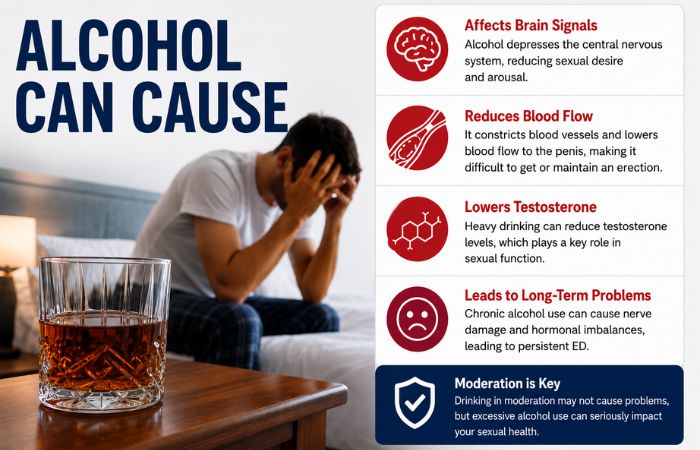
Alcohol affects the central nervous system, which plays a direct role in triggering and maintaining an erection.
In smaller amounts, alcohol may reduce anxiety and increase confidence temporarily.
In larger amounts, it depresses the nervous system enough to interfere with the physical process an erection depends on.
This is sometimes referred to informally as “brewer’s droop,” a temporary, alcohol-related erectile difficulty that resolves once alcohol clears the system.
Common Causes and Contributing Factors
Short-term factors:
- Heavy drinking in a single sitting
- Alcohol’s depressant effect on the nervous system
- Reduced sensation and blood flow during intoxication
Long-term factors:
- Chronic heavy drinking, which can damage nerves involved in erectile function
- Lower testosterone levels linked to long-term alcohol use
- Liver damage, which can affect hormone regulation
- Cardiovascular effects from long-term drinking, since healthy blood flow is essential for erections
- Alcohol-related anxiety or depression, which can independently affect sexual function
Signs Alcohol May Be Contributing to Your ED
- Erectile difficulty that mainly happens after drinking
- Improved erectile function on days or periods without alcohol
- A pattern of heavier drinking alongside a gradual decline in sexual function over time
- Other signs of heavy alcohol use, like poor sleep or fatigue
These patterns are useful clues, but they don’t rule out other contributing causes.
A medical evaluation can help confirm what’s really going on.
How Alcohol Affects Erections, Explained Simply
An erection depends on a coordinated signal between the brain, nerves, and blood vessels.
Alcohol interferes with this signal at multiple points.
In the short term, it dulls nerve signals and slows the body’s response, making arousal and erection harder to achieve or maintain.
Over the long term, heavy use can cause more lasting nerve and hormonal changes, meaning the effect isn’t limited to just the night of drinking.
Why One Drink Feels Different From Many
A small amount of alcohol may not noticeably affect erectile function, and for some people, it may even ease anxiety enough to help.
Larger amounts consistently work against it, since the depressant effect on the nervous system becomes stronger as intake increases.
Common Misconceptions About Alcohol and ED
- “A few drinks will improve performance by reducing nerves.” While alcohol may temporarily ease anxiety, it also works against the physical process needed for an erection, especially past small amounts.
- “Only heavy drinkers experience this.” Even occasional heavy drinking can cause temporary ED in men who don’t otherwise drink often.
- “If it happens once, it means there’s a bigger problem.” A single alcohol-related episode is common and doesn’t necessarily indicate an underlying medical issue.
- “Cutting back won’t make a difference.” For many men, especially those with alcohol-related ED, reducing intake does lead to improvement over time.
What People Usually Do About It
- Assume a single episode is a one-off and don’t think much of it
- Notice a pattern over time but feel unsure if alcohol is really the cause
- Try cutting back on their own to see if symptoms improve
- Eventually bring it up with a doctor, especially if the pattern continues
Options for Managing Alcohol-Related ED
- Moderating alcohol intake. Reducing overall consumption is often the most direct way to address alcohol-related ED.
- Tracking patterns. Noting whether ED correlates with drinking can help clarify how significant a factor it is.
- Medical evaluation. A doctor can check for related issues, like low testosterone or cardiovascular effects, especially with long-term heavy drinking.
- Support for reducing alcohol use. If cutting back feels difficult on your own, a doctor or counselor can help, particularly if drinking has become a larger pattern.
- Addressing related health factors. Sleep, stress, and cardiovascular health all play a role and are worth addressing alongside alcohol use.
Key Takeaways on Alcohol and Erectile Dysfunction
- Alcohol can cause short-term ED through its effect on the nervous system, even from a single heavy drinking episode.
- Long-term heavy drinking can contribute to more lasting ED through nerve damage, hormone changes, and cardiovascular effects.
- Small amounts of alcohol affect people differently, but larger amounts consistently work against erectile function.
- A pattern linking ED to drinking is a useful clue, not a self-diagnosis.
- Reducing alcohol intake often leads to improvement, especially when ED is closely tied to drinking habits.
FAQ: Alcohol and Erectile Dysfunction
How much alcohol can cause ED?
There’s no fixed amount, since it varies by individual, but heavier drinking in a single sitting is more likely to cause noticeable, temporary ED.
Is alcohol-related ED permanent?
Short-term, occasional cases are usually temporary and resolve once alcohol clears the system. Long-term heavy drinking carries more risk of lasting effects, though improvement is still possible with reduced use.
Can cutting back on alcohol improve ED?
Yes, for many men, especially when alcohol is a significant contributing factor. Improvement can take time, particularly after long-term heavy use.
Does the type of alcohol matter?
No, the effect is linked to alcohol itself and the amount consumed, not the specific type of drink.
Should I be concerned after just one incident?
A single episode, especially after heavy drinking, is common and not usually a sign of a deeper issue. A repeated pattern is more worth discussing with a doctor.
When should I see a doctor about this?
If ED persists even without drinking, or if you’re concerned about your overall alcohol use, a doctor can help evaluate both issues together.
Sources:
https://www.pennmedicine.org/conditions/male-hypogonadism
https://www.bcm.edu/healthcare/specialties/urology/mens-health/testosterone-replacement-therapy
https://medschool.umich.edu/health-lab-podcast/new-research-gender-affirming-testosterone-and-fertility
https://urology.stanford.edu/patient_care/patient_care.html

Richard Amaro, is a renowned writer, sex therapist, and coach, with years of experience helping individuals and couples enhance their relationships and intimacy. Read more about me…