How to Overcome Sexual Performance Anxiety?
Sexual performance anxiety is usually overcome through a mix of open communication, reducing pressure around sex, and addressing the anxiety itself, through therapy, stress management, or a combination of both. It rarely resolves through willpower alone.
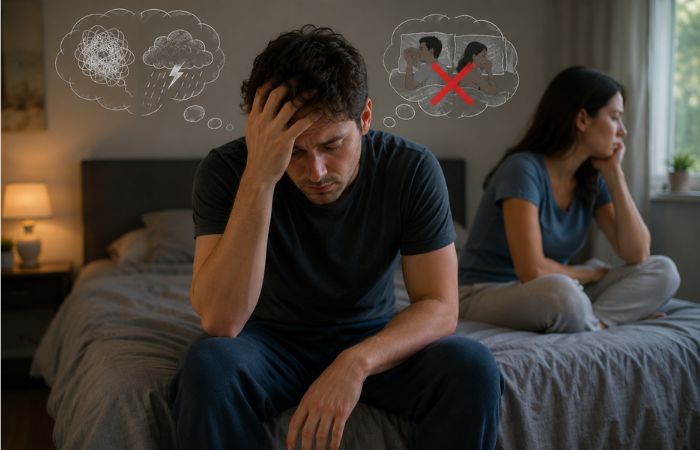
Worrying about how you’ll perform during sex can become its own obstacle.
The more you worry, the harder it can be to relax, which then feeds more worry the next time.
This cycle is common, and it’s treatable. Understanding how it works is the first step toward breaking it.
In this article, you’ll learn:
- What sexual performance anxiety actually is
- Why it matters and how common it really is
- What causes it in the first place
- Signs that point to performance anxiety specifically
- How the anxiety cycle works in the body
- Common misconceptions worth clearing up
- Practical, realistic options for overcoming it
Why Sexual Performance Anxiety Matters
Performance anxiety doesn’t just affect one moment. Left unaddressed, it can affect relationships, self-esteem, and overall mental health.
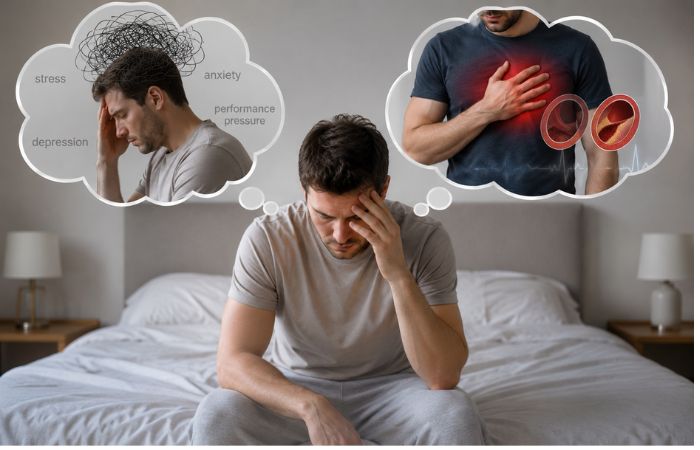
It’s also one of the more misunderstood sexual health issues. Many people assume something is physically wrong, when the real cause is anxiety itself.
Recognizing this distinction matters, because the path to overcoming it looks very different from treating a physical condition.
What Sexual Performance Anxiety Actually Is?
Sexual performance anxiety is worry or fear about how you’ll perform during a sexual encounter.
It can affect people of any gender, though it’s discussed most often in relation to erectile difficulties in men.
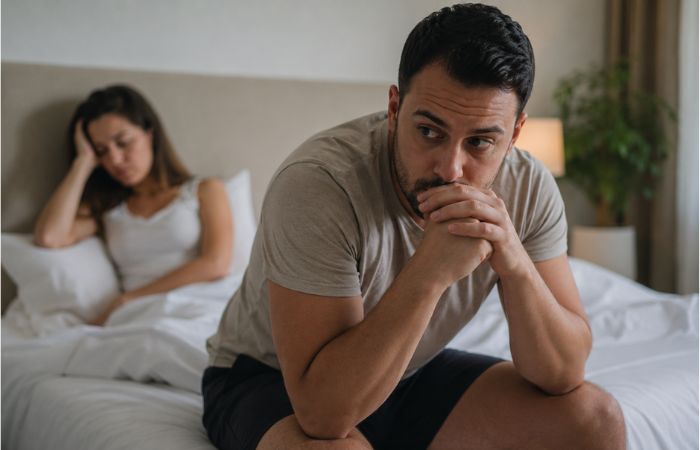
It can involve fear of not being able to perform, fear of disappointing a partner, or worry about body image and comparison.
This anxiety can lead to physical symptoms, like difficulty with arousal, which then reinforces the original fear.
How It Differs From General Anxiety
General anxiety can show up anywhere in life. Performance anxiety is more situational, tied specifically to sexual encounters or the anticipation of one.
Someone can feel completely calm in most areas of life, yet experience significant anxiety specifically around sex.
Common Causes and Contributing Factors
Personal and Psychological Factors
- Past negative sexual experiences, including previous episodes of difficulty
- Low self-esteem or body image concerns
- General anxiety or perfectionism that extends into the bedroom
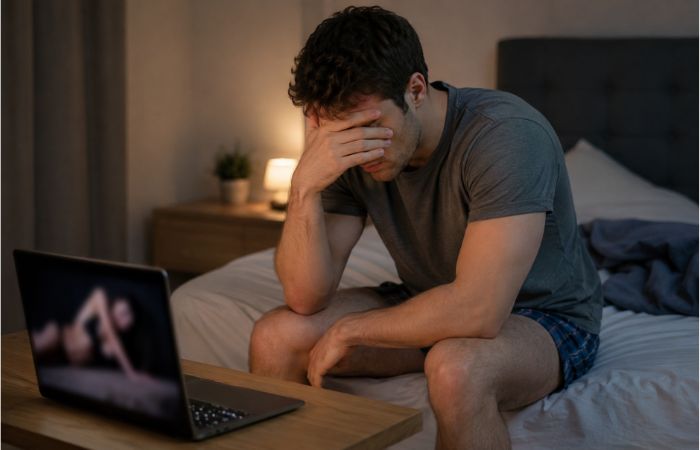
- Unrealistic expectations shaped by pornography or media
Relationship and Situational Factors
- New relationships or new partners, where pressure to perform feels higher
- Relationship tension unrelated to sex itself
- Pressure to meet a partner’s expectations, real or assumed
- High stress periods in life that spill over into intimacy
Signs of Sexual Performance Anxiety
- Noticeable worry or dread before sexual activity
- Physical difficulty, like trouble with arousal, that improves alone but not with a partner
- Overthinking or self-monitoring during sex instead of being present
- Avoiding intimacy to sidestep the anxiety
- Symptoms that are situational rather than constant
These signs are common indicators, not a formal diagnosis. A doctor or therapist can help confirm what’s going on.
How Performance Anxiety Works in the Body
Anxiety triggers the body’s stress response. This releases hormones like adrenaline, which narrow blood vessels and prepare the body to react to danger.
That response works against the relaxed physical state needed for arousal.
The result is a loop: anxiety interferes with the body’s response, which then confirms the original fear, which increases anxiety the next time.
Breaking the Cycle
Since anxiety is what’s driving the physical response, addressing the anxiety directly tends to work better than focusing on the physical symptom alone.
This is why therapy and communication often help more than trying to simply “not think about it.”
Common Misconceptions About Performance Anxiety
- “It means something is physically wrong.” Often, physical health is completely normal, and anxiety is the primary driver.
- “Only inexperienced people deal with this.” It can affect anyone, at any age, and often appears later in life during periods of stress or change.
- “I just need to relax and it’ll go away.” Trying to force relaxation rarely works, since the anxiety response is largely automatic.
- “Talking about it will make it worse.” Open communication with a partner tends to reduce pressure rather than increase it.
What People Usually Do About It
- Avoid intimate situations to sidestep the anxiety, which often reinforces the pattern
- Try to push through it without addressing the underlying cause
- Search for quick fixes rather than the root issue
- Eventually talk to a doctor or therapist once the pattern persists
- Open up to a partner, often finding more understanding than expected
Options for Overcoming Sexual Performance Anxiety
Communication-Based Approaches
- Talking openly with a partner about what’s happening, without over-explaining or apologizing repeatedly
- Shifting focus away from “performance” and toward connection and comfort
- Agreeing to remove pressure from a specific outcome during intimacy
Therapy and Professional Support
- Cognitive behavioral therapy, which helps identify and reframe anxious thought patterns
- Sex therapy, which addresses performance anxiety directly and can involve a partner if helpful
- General therapy for underlying anxiety, stress, or self-esteem issues
Practical and Lifestyle Approaches
- Mindfulness or breathing techniques to reduce anxiety in the moment
- Reducing alcohol use, which can worsen both anxiety and physical response
- Regular exercise, which supports overall stress management
- Limiting comparison to pornography or unrealistic expectations
Medical Support When Needed
A doctor can rule out physical causes and, in some cases, may recommend short-term medication to help break the cycle while other approaches take effect.
Key Takeaways on Overcoming Performance Anxiety
- Sexual performance anxiety is a common, treatable cause of sexual difficulty, not a sign of a permanent problem.
- It often creates a self-reinforcing cycle between anxiety and physical response.
- Addressing the anxiety directly tends to work better than focusing only on the physical symptom.
- Communication with a partner is one of the most effective, and most overlooked, tools available.
- Therapy, stress management, and sometimes short-term medical support all play a role in recovery.
FAQ: Overcoming Sexual Performance Anxiety
How common is sexual performance anxiety?
It’s considered a common cause of sexual difficulty, particularly in younger adults with no underlying physical condition, though exact rates vary across studies.
Can performance anxiety go away on its own?
For some people, mild cases improve as stress decreases. For persistent cases, active steps like therapy or open communication usually work better than waiting it out.
Will medication fix performance anxiety permanently?
Medication can help manage symptoms temporarily, but it doesn’t address the anxiety itself. Combining it with therapy or communication tends to work better long term.
Should I talk to my partner about this?
Yes, in most cases. Open communication tends to reduce pressure and can strengthen the relationship, rather than causing harm.
How long does it take to overcome performance anxiety?
This varies widely. Some people notice improvement within weeks of addressing it directly, while others take longer, especially if deeper anxiety or past experiences are involved.
Should I see a doctor or a therapist first?
A doctor can help rule out physical causes first. If anxiety appears to be the main factor, they can refer you to a therapist who specializes in this area.
Sources:
https://europepmc.org/article/MED/42415341
https://academic.oup.com/humrep/article-abstract/19/10/2303/589060?redirectedFrom=fulltext
https://academic.oup.com/jsm/article-abstract/10/6/1628/6940119?redirectedFrom=fulltext
https://www.sciencedirect.com/search?qs=testosterone

Richard Amaro, is a renowned writer, sex therapist, and coach, with years of experience helping individuals and couples enhance their relationships and intimacy. Read more about me…