Can Anxiety and Depression Cause Low Libido?
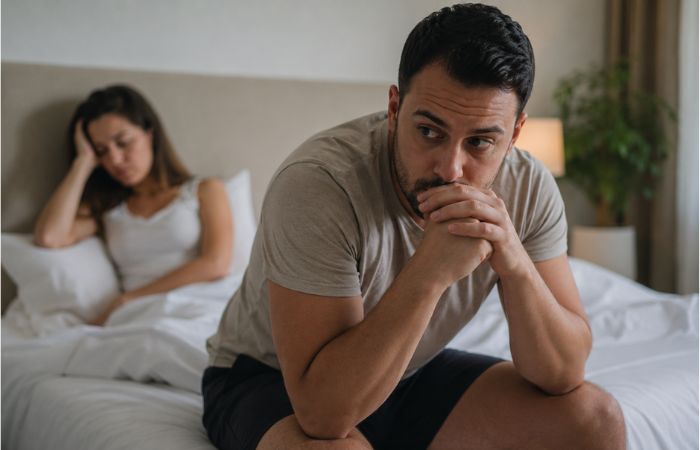
Yes, both anxiety and depression can lower sex drive. They affect the same brain chemistry and stress systems involved in sexual desire, and some medications used to treat them can lower libido even further.
Sex drive isn’t purely physical. It’s closely tied to mood, stress, and mental state.
When anxiety or depression shows up, sex drive is often one of the first things to fade.
This isn’t a character flaw or a sign something is wrong with a relationship.
It’s a well documented effect of how these conditions work in the brain and body.
In this article, you’ll learn:
- How anxiety and depression are linked to low libido
- Why this connection matters for treatment decisions
- What’s actually happening in the brain and body
- Common causes and contributing factors
- Signs this might be affecting you
- Common misconceptions about this topic
- Practical options that can help
Why the Link Between Mental Health and Libido Matters
Low libido is often treated as a purely physical or relationship issue. That framing can miss the real cause.
If anxiety or depression is driving the drop in desire, addressing the relationship or trying supplements won’t fix the underlying problem.
Understanding the mental health connection helps people get the right kind of help, instead of guessing.
It also matters because low libido caused by mental health struggles is common.
It’s not rare, and it’s not something to feel ashamed about.
What This Connection Actually Is?
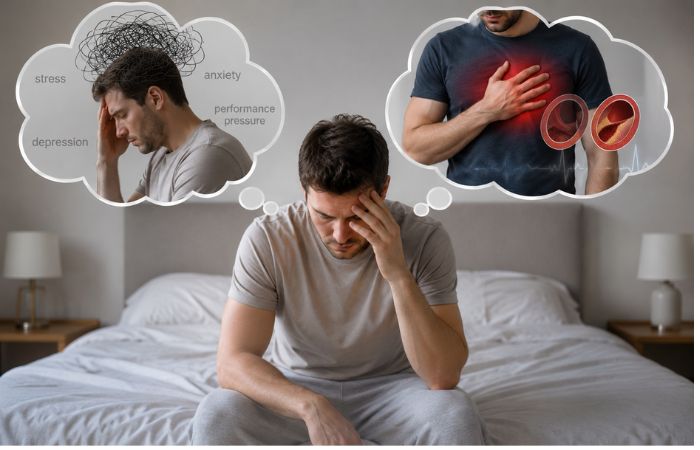
Anxiety and depression both affect brain chemicals involved in mood, motivation, and pleasure, including serotonin and dopamine.
Sexual desire depends heavily on these same systems.
When they’re disrupted, desire often drops along with mood, energy, and motivation in other areas of life.
This means low libido isn’t necessarily a separate problem.
It can be one symptom among several, alongside fatigue, poor concentration, or loss of interest in other activities.
Common Causes and Contributing Factors
- Chronic stress that keeps the body in a heightened alert state
- Depression itself, which often reduces interest and pleasure across many areas of life
- Anxiety, particularly when it includes constant worry or racing thoughts
- Certain antidepressant medications, especially SSRIs, which are known to lower libido in some people
- Poor sleep, which frequently accompanies both anxiety and depression
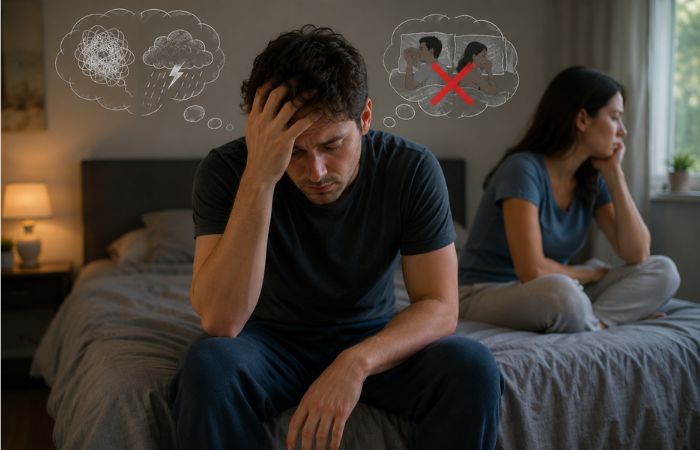
- Relationship stress that develops as a result of mental health struggles
Signs Anxiety or Depression May Be Affecting Your Libido
- A noticeable drop in interest in sex compared to your usual baseline
- Low libido that appeared around the same time as mood changes
- Reduced interest in other activities you normally enjoy, not just sex
- Fatigue, trouble concentrating, or changes in sleep alongside lower desire
- Feeling emotionally flat or disconnected, even in situations that used to feel enjoyable
These signs don’t confirm a diagnosis on their own, but they’re useful patterns to mention to a doctor or therapist.
How This Works in the Body, Explained Simply
Think of your brain’s mood and desire systems as running on the same circuit. When that circuit is disrupted by anxiety or depression, multiple systems dim at once, not just mood.
Chronic stress also raises cortisol, a hormone that can interfere with the hormones involved in sexual desire when levels stay elevated over time.
So the drop in libido isn’t random. It’s a downstream effect of the same brain chemistry driving the anxiety or depression itself.
Common Misconceptions About Mental Health and Libido
- “Low libido always means relationship problems.” It can, but mental health is a major independent factor that’s often overlooked.
- “If I’m not sad, depression isn’t the cause.” Depression can show up as numbness or lack of interest, not just sadness, and libido often drops either way.
- “Antidepressants are the only reason for low libido during treatment.” Untreated depression itself commonly lowers libido too, so it isn’t always the medication.
- “This means something is permanently wrong.” For many people, libido improves once anxiety or depression is properly managed.
What People Usually Do About It
- Assume it’s a relationship issue before considering mental health
- Feel embarrassed and avoid bringing it up with a doctor
- Eventually mention it during a mental health appointment, often as an afterthought
- Wonder if medication is to blame without discussing alternatives
- Search for supplements or quick fixes instead of addressing the root cause
Options for Managing Anxiety, Depression, and Low Libido
- Talk to a doctor or therapist. Identifying whether anxiety, depression, or medication is the main driver helps guide the right next step.
- Review medication options. If an antidepressant seems to be affecting libido, a doctor may adjust the dose or try a different medication.
- Therapy. Cognitive behavioral therapy and other approaches can address both the underlying mental health condition and its effects on desire.
- Stress management. Techniques like exercise, mindfulness, and improved sleep can support both mood and libido.
- Open communication with a partner. Reducing pressure and explaining what’s happening can ease relationship strain while treatment takes effect.
- Patience. Libido often improves gradually as mental health improves, not immediately.
Key Takeaways on Anxiety, Depression, and Low Libido
- Anxiety and depression can directly lower sex drive through shared brain chemistry.
- This is a common, well documented effect, not a personal failing or relationship flaw.
- Some antidepressants can further reduce libido, though untreated depression itself often does too.
- Signs like reduced interest in other activities, alongside low libido, point toward a mental health connection.
- Libido often improves as the underlying anxiety or depression is treated, though this can take time.
FAQ: Anxiety, Depression, and Low Libido
Can anxiety alone lower libido, even without depression?
Yes. Anxiety on its own can reduce sexual desire, particularly when it involves chronic worry or a constant stress response.
Will my libido go back to normal once my mental health improves?
For many people, yes, though the timeline varies. Some notice improvement gradually as treatment progresses.
Is it the depression or the medication causing low libido?
It can be either, or both. A doctor can help sort out which factor is playing the larger role in your specific case.
Should I stop my antidepressant if it’s affecting my libido?
Don’t stop medication without talking to your doctor first. There are often other options, like adjusting the dose or switching medications, that can help.
Is low libido from depression a sign something else is wrong?
Not necessarily. It’s a common, recognized symptom of depression itself, not usually a separate condition.
Should I see a doctor or a therapist first?
Either can be a good starting point. A doctor can review medications and physical health, while a therapist can help address the underlying anxiety or depression directly.
Sources:
https://pursuit.unimelb.edu.au/articles/the-myth-of-testosterone-rex
https://clinicaltrials.gov/study/NCT03242408?term=testosterone&utm_source=chatgpt.com&viewType=Card&rank=1
https://europepmc.org/article/MED/42415341
https://pubmed.ncbi.nlm.nih.gov/8273987

Richard Amaro, is a renowned writer, sex therapist, and coach, with years of experience helping individuals and couples enhance their relationships and intimacy. Read more about me…