Can Porn Cause Erectile Dysfunction?
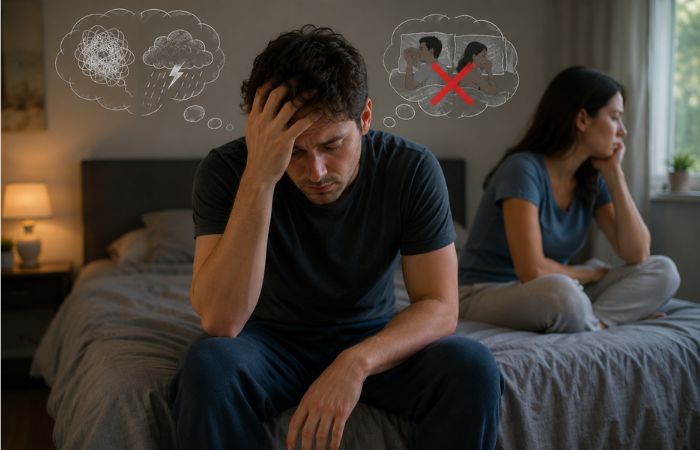
The evidence is mixed. Some studies find a weak link between heavy pornography use and erectile dysfunction (ED), while others find no connection at all. For most men, the more likely drivers are performance anxiety, unrealistic expectations, or guilt about porn use itself, rather than porn directly damaging sexual function.
“Porn-induced ED” has become a popular term online, often discussed with more certainty than the actual research supports.
This doesn’t mean the concern is baseless.
It means the picture is more complicated than a simple cause and effect.
Understanding what’s actually known, and what isn’t, helps separate genuine risk factors from internet folklore.
In this article, you’ll learn:
- What the term “porn-induced ED” actually refers to
- Why the scientific evidence is mixed rather than conclusive
- Who tends to report this issue most
- The signs that are often described alongside this pattern
- How psychological and behavioral factors may be involved
- Common misconceptions worth clearing up
- What options exist if you’re concerned about this in your own life
Why the Porn and ED Debate Matters
This topic gets discussed a lot, but often with strong opinions and weak evidence on both sides.
Some sources treat it as an established medical condition.
Others dismiss it entirely…
Neither extreme reflects the research well.
Getting a clearer, calmer picture matters because it affects real decisions, including whether someone seeks therapy, changes habits, or worries unnecessarily about their health.
What “Porn-Induced ED” Actually Refers To
The theory behind porn-induced ED suggests that frequent pornography use, especially with rapidly changing or highly stimulating content, may cause the brain to require more intense stimulation to become aroused.
Over time, the theory goes, this could make real-life partnered sex feel less arousing by comparison, contributing to erectile difficulties.
It’s important to note that this isn’t a formally recognized medical diagnosis.
It’s a theory discussed in online communities and some clinical settings, but it isn’t listed as a distinct condition in major diagnostic manuals, and researchers don’t agree on whether it exists as a standalone cause of ED.
Common Causes and Contributing Factors
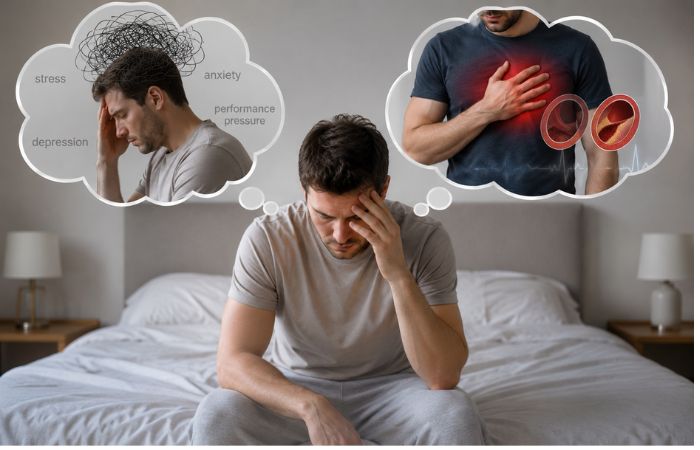
- Performance anxiety, especially when comparing real experiences to porn scenarios
- Guilt or shame about porn use, which some research suggests may itself contribute to erectile difficulty, separate from the porn use itself
- Unrealistic expectations about what sex “should” look or feel like
- Underlying anxiety or stress unrelated to porn but present alongside it
- Physical health factors, like cardiovascular issues, that are unrelated to porn use but can be mistakenly attributed to it
Signs and Patterns Often Described
Men who report this issue often describe:
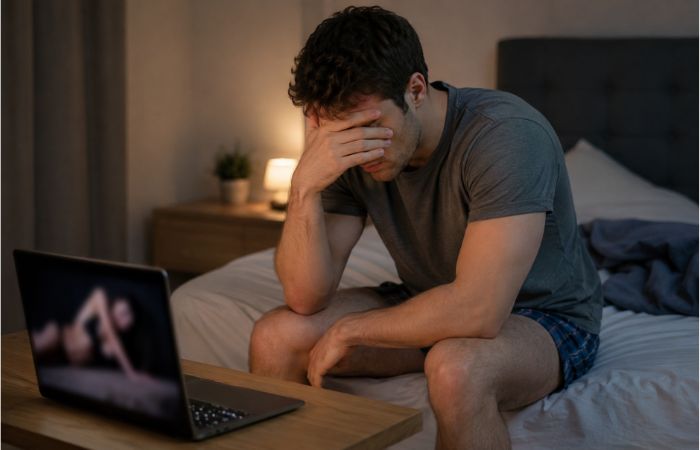
- Erections that occur normally during solo porn use but not with a partner
- A need for increasingly intense content over time to feel aroused
- Reduced interest in partnered sex compared to porn
- Anxiety or self-consciousness during partnered encounters
These patterns are commonly reported, but it’s worth noting that similar patterns can also stem from performance anxiety or relationship factors unrelated to porn use itself.
How This Connection Might Work, Explained Simply
Think of arousal like a dial that responds to stimulation.
Porn offers a highly controlled, constantly novel form of stimulation that some researchers suggest could shift what a person’s brain expects from sexual arousal over time.
Partnered sex, by comparison, is less predictable and less visually intense, which some men describe as feeling less stimulating by comparison.
That said, this explanation remains a theory, not a confirmed mechanism.
Human sexual response is influenced by many overlapping factors, and researchers have not established a clear, direct causal pathway from porn use to ED in the way this theory suggests.
Common Misconceptions About Porn and ED
- “Any porn use will eventually cause ED.” Most research doesn’t support a direct dose-based relationship for the general population.
- “This is a well-established medical diagnosis.” It isn’t formally recognized as a distinct condition, and researchers disagree on how significant the effect is, if any.
- “If porn isn’t the cause, nothing needs to change.” Even without a confirmed causal link, some men still find that reducing use, or addressing anxiety and expectations, improves their experience.
- “This only affects men who watch porn excessively.” Some studies point more toward guilt, anxiety, or unrealistic expectations as the deciding factor, rather than sheer frequency of use.
What People Usually Do About This Concern
- Search online for explanations, often encountering strongly opinionated but unverified claims
- Try reducing or eliminating porn use to see if symptoms improve
- Avoid discussing it with a doctor due to embarrassment
- Eventually bring it up with a healthcare provider or therapist once the pattern persists
Options for Addressing Porn-Related Concerns About ED
- Medical evaluation first. A doctor can rule out physical causes of ED before assuming porn is responsible.
- Therapy or counseling. A therapist familiar with sexual health can help address anxiety, guilt, or unrealistic expectations directly.
- Gradual behavior changes. Some men choose to reduce or take a break from porn use to see whether their experience changes, without treating it as a guaranteed fix.
- Open communication with a partner. Reducing pressure and comparison can ease performance-related anxiety.
- Avoiding self-diagnosis. Since the evidence is mixed, ruling out other causes matters more than assuming porn is the sole explanation.
Key Takeaways on Porn and Erectile Dysfunction
- The scientific evidence linking porn use directly to ED is mixed and not conclusive.
- Guilt, anxiety, and unrealistic expectations may play a larger role than porn use itself.
- “Porn-induced ED” isn’t a formally recognized medical diagnosis.
- Medical evaluation should come first to rule out physical causes.
- Reducing use or seeking therapy may help some men, even without a confirmed causal link.
FAQ: Porn and Erectile Dysfunction
Is porn-induced ED a real medical condition?
It’s a widely discussed theory, but it isn’t formally recognized as a distinct medical diagnosis. Research on the topic remains limited and inconsistent.
Can quitting porn improve erectile function?
Some men report improvement, though this hasn’t been consistently confirmed in controlled studies. For some, the benefit may come more from reduced anxiety or guilt than from porn use itself.
How do I know if porn is really the cause of my ED?
The most reliable first step is a medical evaluation to rule out physical causes. A pattern of normal erections during solo porn use but difficulty with a partner may suggest a psychological factor, but this should be discussed with a professional rather than self-diagnosed.
Does the amount of porn watched matter?
Research hasn’t established a clear frequency threshold. Individual factors like guilt, expectations, and anxiety appear to matter more in current studies than hours of use alone.
Should I see a doctor or a therapist about this?
A doctor can rule out physical causes first. If no physical cause is found, a therapist experienced in sexual health can help address the psychological factors involved.
Is it normal to feel anxious talking about this?
Yes, and it’s common. Healthcare providers who specialize in sexual health address this topic regularly and can offer guidance without judgment.
Sources:
https://www.hopkinsmedicine.org/health/conditions-and-diseases/erectile-dysfunction
https://www.health.harvard.edu/mens-health/why-testosterone-levels-drop-and-when-to-consider-treatment
https://pubmed.ncbi.nlm.nih.gov/?term=testosterone
https://mlabs.umich.edu/tests/bioavailable-testosterone-panel

Richard Amaro, is a renowned writer, sex therapist, and coach, with years of experience helping individuals and couples enhance their relationships and intimacy. Read more about me…